Module 2: Defining Your Vision and Sales Objectives
Why Vision And Objectives Matter

From Business Objectives to Sales Execution
Sales teams perform best when they understand why their work matters.
A clear sales vision and well-defined objectives:
- Align sales efforts with business priorities
- Help teams focus on what truly matters
- Enable measurable progress and accountability
Without this clarity, sales activity increases — but results do not.
What Are Business Objectives?
Business objectives are high-level, measurable outcomes an organization wants to achieve to fulfill its vision and mission.
They guide decision-making, resource allocation, and strategic priorities across the company.
Business objectives are:
- Strategic and company-wide
- Measurable over time
- Aligned to the organization’s vision
- Used to evaluate overall success
Examples of common business objectives:
- Increase annual revenue by 20%
- Improve customer retention by 15%
- Expand into new geographic markets
Linking Business Objectives to Sales Strategy

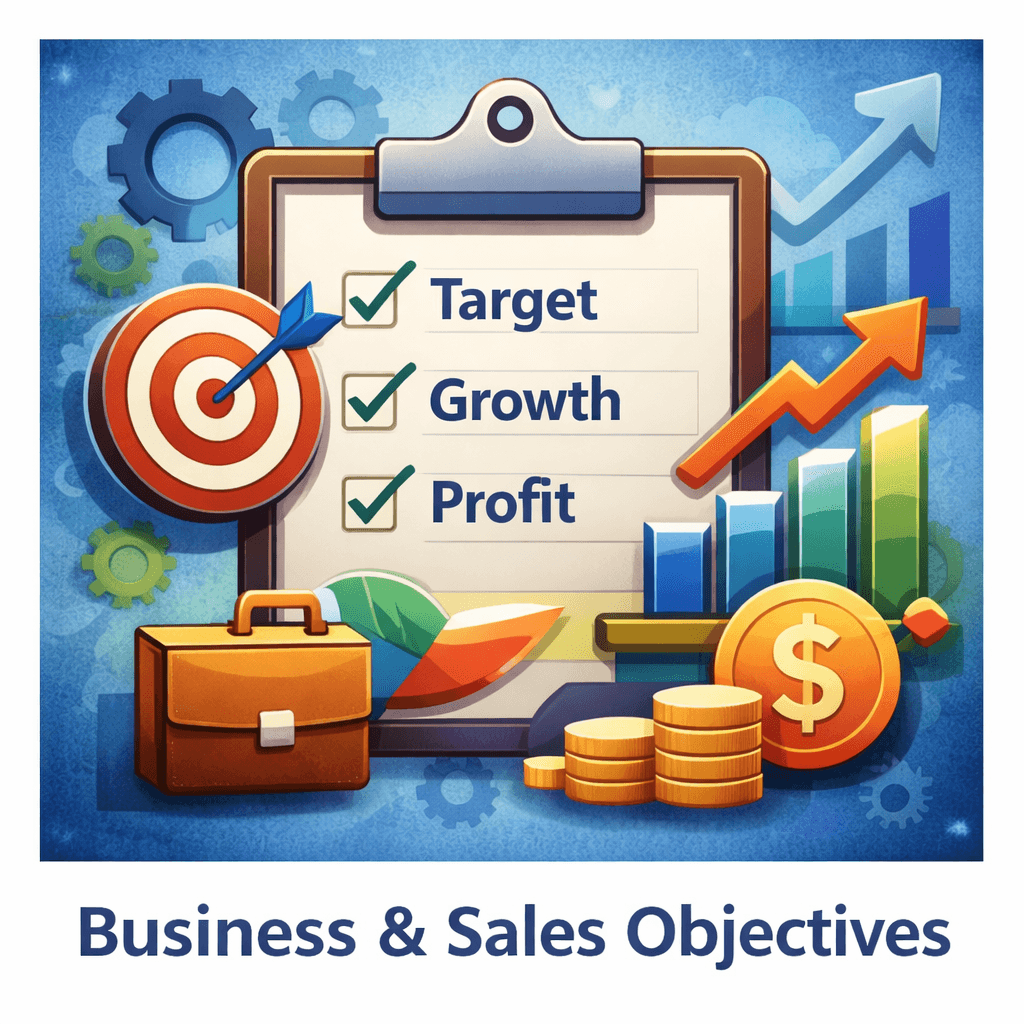

Sales does not operate in isolation.
A strong sales strategy:
- Starts with business objectives aligned with the company's Vision & Mission.
- Translates them into sales objectives
- Guides daily sales goals and initiatives
This alignment ensures sales activity directly supports business success.
What Are Sales Objectives?
Sales objectives are specific outcomes the sales organization is responsible for delivering in support of business objectives.
They define what success looks like for sales.
Sales objectives:
- Provide strategic direction for sales teams
- Help prioritize accounts, segments, and activities
- Enable performance measurement and coaching
Increase Customer Retention Rates by 10% within the next six months.
Diversify the product portfolio to meet emerging market demands.
Sales Objectives vs Sales Goals


Sales Initiatives Turning Strategy Into Action
Sales initiatives are the programs, projects, or actions designed to achieve sales goals.
They define how the strategy is executed.
Common initiatives include:
- Targeted prospecting campaigns
- Sales training and enablement
- CRM and process improvements
Launch an outbound campaign focused on top 50 target accounts supported by value-based messaging.
Setting SMART Sales Goals
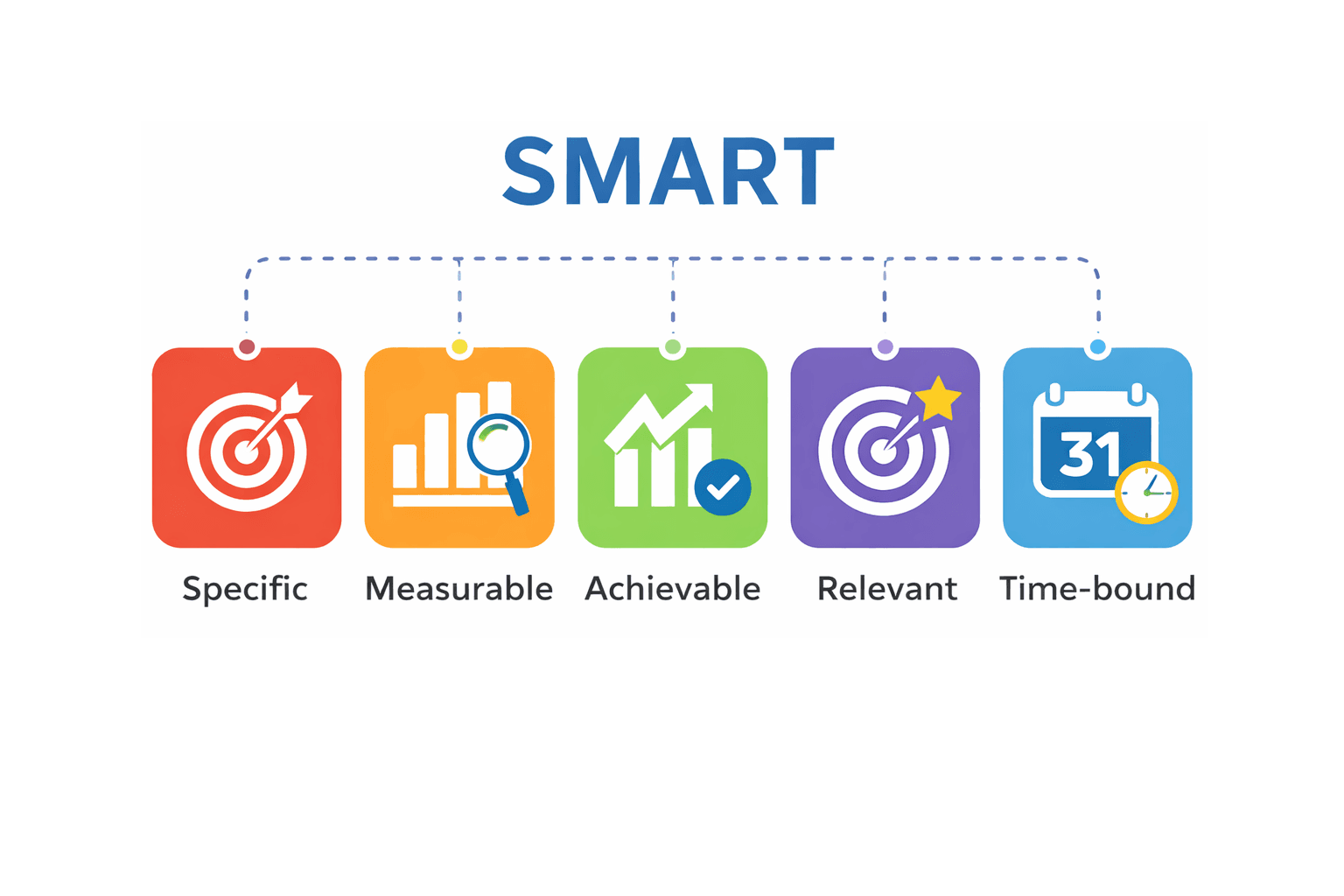
The SMART Framework
SMART goals turn strategy into execution.
A SMART sales goal is:
- Specific — clearly defines what must be achieved.
- Measurable — includes a metric to track progress.
- Achievable — realistic given resources and constraints.
- Relevant — directly supports business and sales objectives.
- Time-bound — has a clear deadline for completion.
This structure creates clarity, focus, and accountability.
SMART Goal Examples
Increase quarterly revenue from $1.2M to $1.5M by Q4 to support the company’s growth objective.
Increase pipeline coverage from 1.5× to 3× by the end of Q2 to improve forecast accuracy.
Ensure 90% of first meetings include structured discovery by the end of the quarter.
Practice Write Your Own SMART Goal
What sales objective are you trying to support?
What will you measure, and what is the desired outcome?
By when must this be achieved, and why does it matter?
Check Your Understanding
Module Summary
Key Takeaways
- Business objectives define what the company must achieve.
- Sales objectives translate business priorities into sales outcomes.
- Sales goals and initiatives drive execution.
- SMART goals create clarity, accountability, and measurable progress.