Sales Performance
Sales performance does not improve by accident.
It improves when direction is clear, metrics are meaningful, forecasts are disciplined, and managers run consistent execution cadences.
If results feel inconsistent, unpredictable, or overly dependent on individual talent, the issue is rarely effort. It is usually structure.
This hub will help you identify where performance is breaking down and guide you toward the right framework to fix it.
If you're new to the SalesOpsCoach framework, start with the full system overview:
👉 How to Increase Sales – The Sales Operations System
Start With Your Bottleneck
Different teams struggle for different reasons. Start where the friction is highest.
“Revenue isn’t growing fast enough.”
Begin with the broader growth levers:
- Process quality
- Metrics discipline
- Sales capability
- AI and automation leverage
👉 Start here:
How to Make More Sales
“Our goals are unclear or misaligned.”
If teams do not understand what matters most, performance becomes reactive.
Clarify the hierarchy:
- Business objectives
- Sales objectives
- Sales goals
- Sales initiatives
- KPIs
👉 Start with:
Sales Goals and Objectives
Then go deeper:
How to Set Sales Goals
“Our KPIs don’t drive the right behavior.”
Too many metrics create noise. Too few create blind spots.
Build a structured KPI system:
- Business result metrics
- Sales objective metrics
- Activity metrics
👉 Explore:
Sales Metrics and KPIs
And choose by model:
Most Important Sales Metrics
“Our forecast isn’t reliable.”
Forecast issues usually come from:
- Weak stage discipline
- Poor data hygiene
- Lack of inspection rhythm
Understand forecasting methods and structure first.
👉 Start here:
What Is a Sales Forecast?
“Productivity is too low.”
If reps are busy but results lag, analyze time allocation and workflow.
Start with a time study and structured optimization approach.
👉 Read:
How to Improve Sales Productivity
The Sales Performance System
Performance is not one metric. It is a loop.
A practical performance system includes six layers:
-
Business Direction
Clear company objectives guide sales focus. -
Sales Objectives & Goals
Translate strategy into measurable targets. -
KPIs & Metrics
Track both leading and lagging indicators. -
Forecasting Discipline
Use structured methods to predict outcomes. -
Rep Productivity & Execution
Improve how time and effort convert to results. -
Management Cadence
Coaching, review rhythm, and accountability loops.
When one layer is weak, performance becomes unstable.
For a full integrated view, see:
What Is Sales Performance Management?
Core Guides by Layer
Foundations
These clarify direction before measuring results.
Measurement & Control
These help you track, inspect, and predict outcomes.
Execution & Optimization
These strengthen daily execution and long-term scalability.
Reading Paths by Role
Founder or General Manager
- Business Objectives
- Sales Goals
- Sales Metrics
- Forecasting
- Performance Management
Focus: alignment and predictability.
Sales Manager
- Sales Goals
- KPIs and Leading Indicators
- Productivity Improvement
- Coaching and Management Cadence
Focus: daily control and team improvement.
Sales Operations Lead
- Sales Goals and Objectives
- KPI Architecture
- Forecast Structure
- Productivity Analysis
- Governance via Sales Operations
Focus: system design and scalability.
How Sales Performance Connects to the Bigger System
Sales performance does not exist in isolation.
- Sales Operations defines governance, ownership, and execution structure.
→ Explore Sales Operations - Sales Process determines stage discipline and conversion quality.
→ Explore Sales Process - Sales Tools enable reporting, automation, and visibility.
→ Explore Sales Tools
When process, metrics, governance, and coaching align, performance becomes manageable instead of unpredictable.
From Insight to Action
Start with one bottleneck.
Do not try to fix everything at once.
Clarify the goal, measure the right metrics, improve stage discipline, strengthen review cadence — then repeat.
Performance improves when structure improves.
Next read
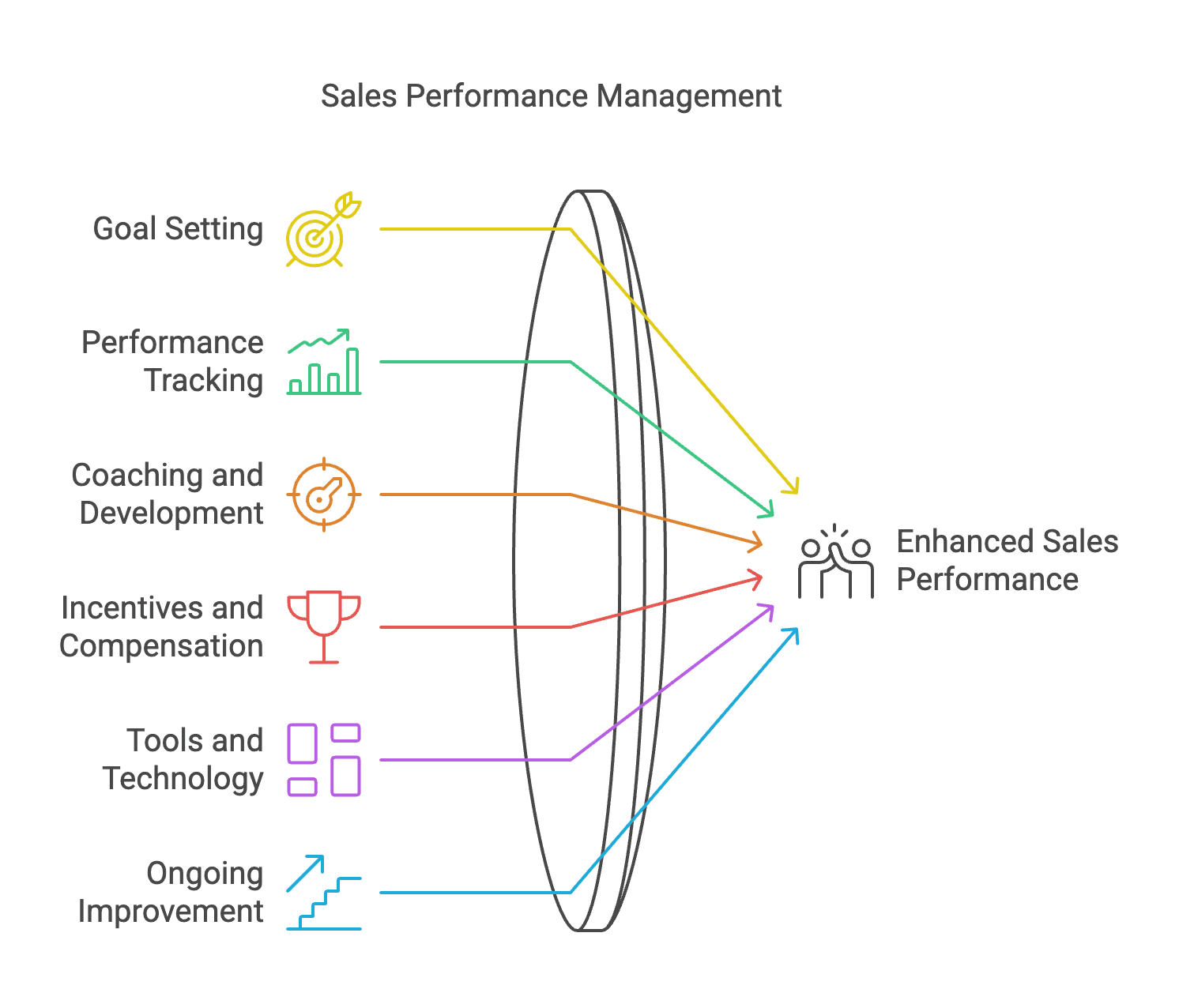
What Is Sales Performance Management? The process of monitoring, analyzing, and improving sales tea…
Sales metrics and KPIs are measurable indicators that track the performance and effectiveness of sa…
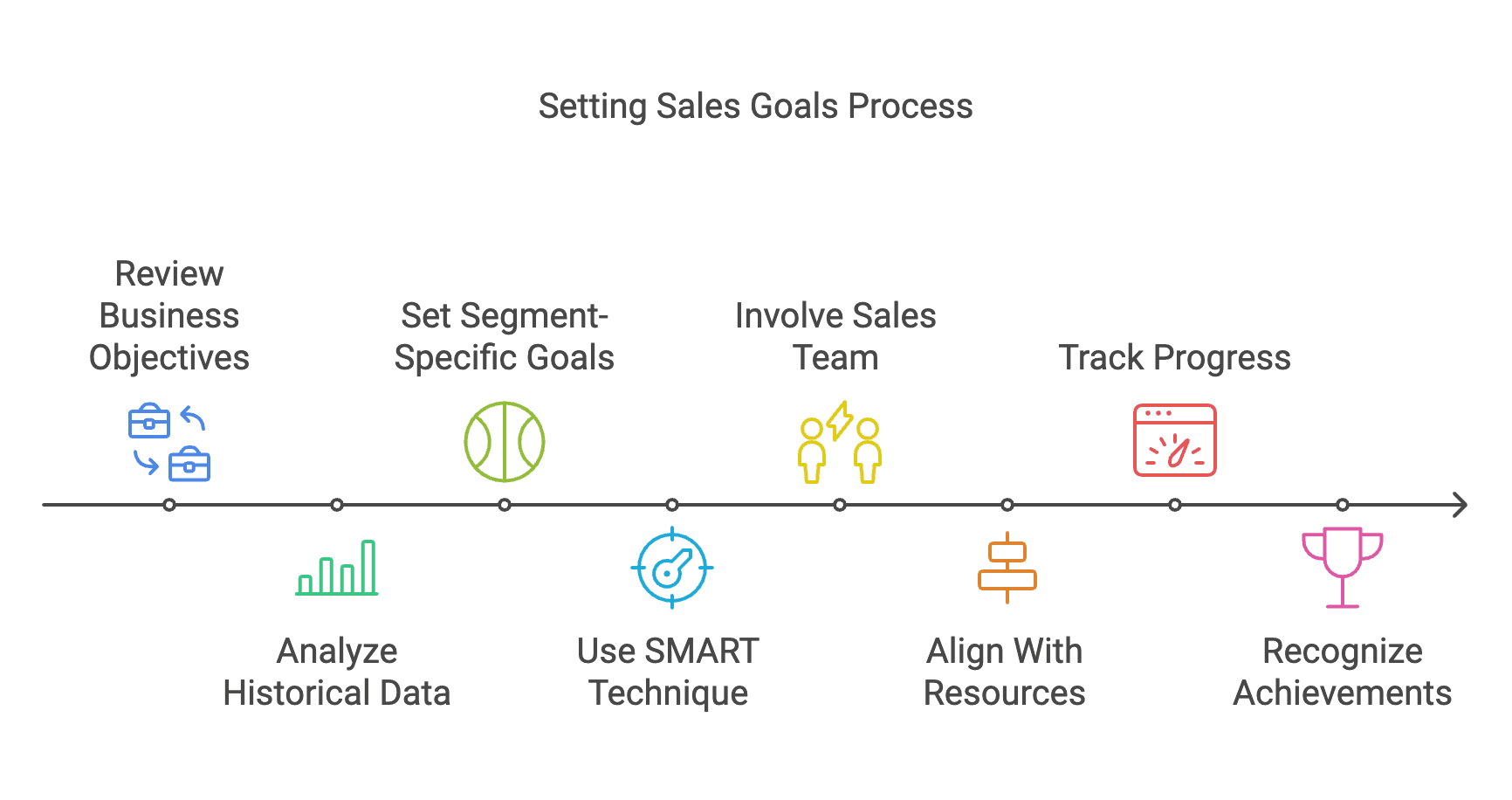
We help you answer the question: "How to set sales goals?" aligning with business objectives and en…