What Does Sales Operations Do?
If you are looking to answer the question, “What does Sales Operations do?” you have found the right place.
Sales Operations is the backbone of a sales organization. Having a dedicated Sales Operations area is like giving your sales team a backstage crew—they take care of all the behind-the-scenes work so your sales reps can shine on stage.
Sales Operations handles things like refining processes, managing CRM tools, analyzing data, and planning incentives, which are crucial for keeping everything running smoothly.
If these responsibilities were piled onto the sales team, they’d be juggling too much, and their time with customers would suffer. By keeping these roles separate, your salespeople can focus on what they do best—connecting with customers and closing deals—while Sales Operations ensures they have the tools, insights, and support to succeed. It’s a win-win!
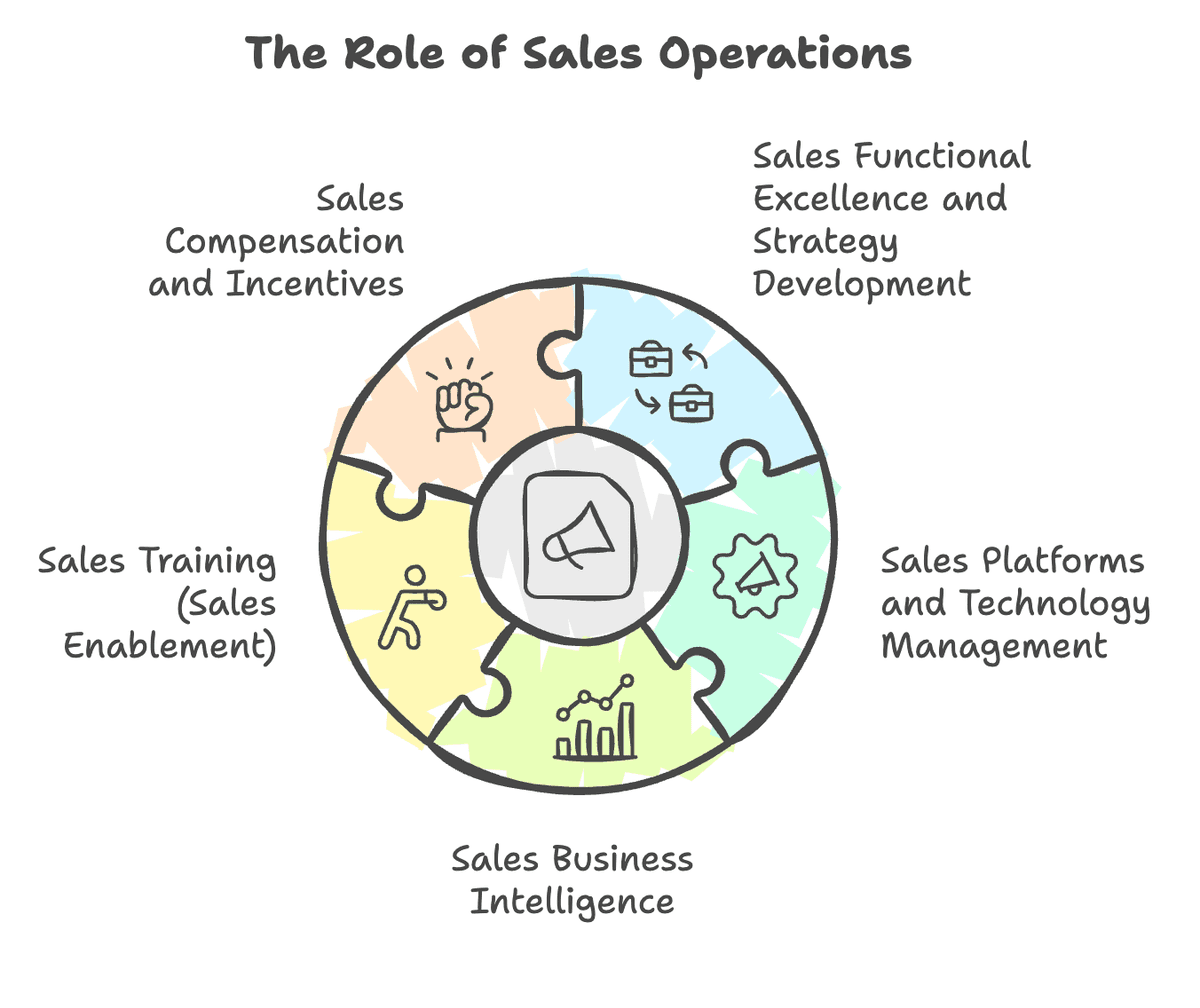
Sales Operations professionals are responsible for a variety of functions, including:
- Sales Functional Excellence and Strategy Development
- Sales Platforms and Technology Management
- Sales Business Intelligence
- Sales Training (Sales Enablement)
- Sales Compensation and Incentives
By focusing on these key areas, Sales Operations ensures that the sales team can perform at its best. This enables the organization to scale, adapt to market changes, and achieve sustainable growth. To see how these responsibilities connect as one model, review the Sales Operations system framework.
What Does Sales Operations Do?
Sales Functional Excellence and Strategy
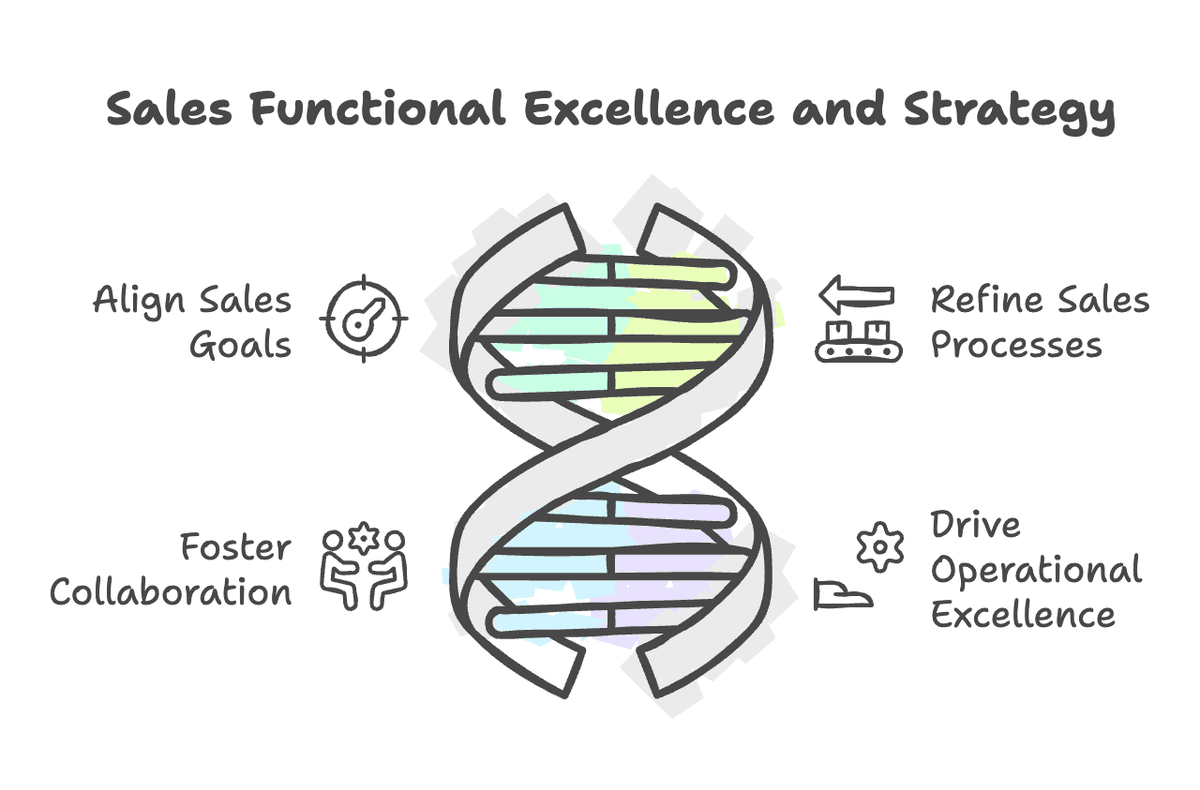
Align Sales Goals with Business Objectives
- Analyze market trends, customer needs, and performance metrics to ensure sales goals support the company’s overarching business strategy.
Create and Refine Sales Processes
- Develop standardized sales workflows to ensure consistency and eliminate inefficiencies.
- Improve the customer journey by streamlining interactions and processes, enabling smoother experiences.
Foster Cross-Functional Collaboration
- Act as a bridge between sales, marketing, product development, and other departments to promote seamless communication and alignment.
- Ensure the sales team has access to the insights, tools, and resources they need by coordinating efforts across teams.
Drive Operational Excellence
- Focus on removing administrative burdens from the sales team, allowing them to concentrate on selling and building customer relationships.
What Does Sales Operations Do?
Sales Platforms and Technology Management
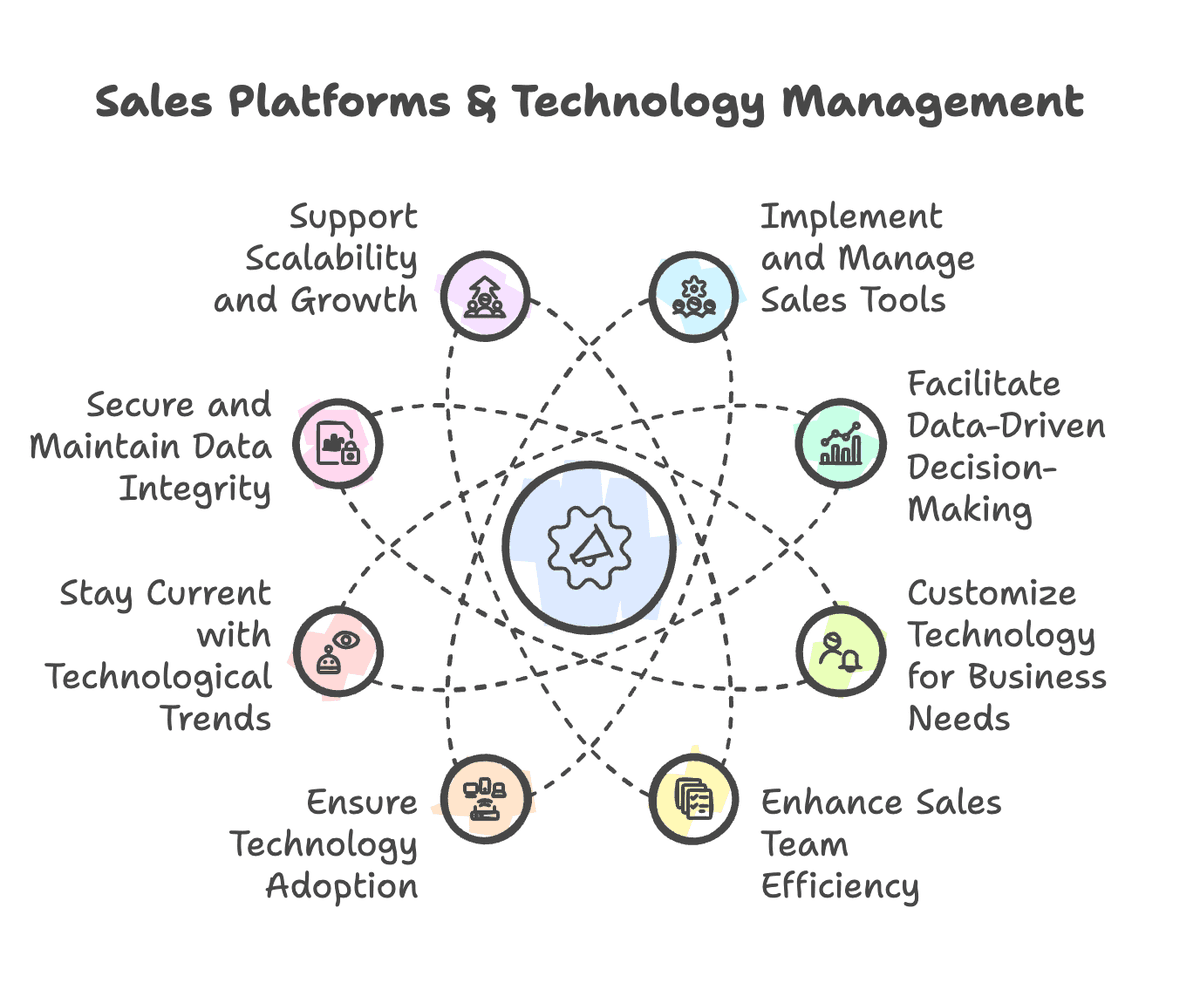
Implement and Manage Sales Tools
- Deploy and oversee tools like CRM to streamline the sales process.
- Ensure technology supports sales team workflows and enhances productivity.
Facilitate Data-Driven Decision-Making
- Leverage CRM and other tools to analyze sales data, identify trends, and generate actionable insights.
- Provide sales leaders with dashboards and reports for informed decision-making.
Customize Technology for Business Needs
- Tailor CRM and sales platforms to align with the organization’s specific processes.
- Integrate systems with other business tools (e.g., ERP) to create a unified ecosystem.
Enhance Sales Team Efficiency
- Automate repetitive tasks such as lead assignment, follow-ups, and reporting.
- Streamline data entry and management to reduce errors and administrative workload.
Ensure Technology Adoption
- Train the sales team to use CRM and other platforms effectively.
- Provide ongoing support to resolve issues and encourage consistent tool usage.
Stay Current with Technological Trends
- Evaluate emerging sales technologies and pilot solutions that could provide a competitive edge.
Secure and Maintain Data Integrity
- Establish best practices for data entry, maintenance, and security.
- Audit systems regularly to maintain accuracy and reliability.
Support Scalability and Growth
- Implement scalable solutions to support growing teams and customer bases.
- Continuously optimize platforms to meet evolving business goals.
What Does Sales Operations Do?
Sales Business Intelligence (Data & Analytics for Sales)
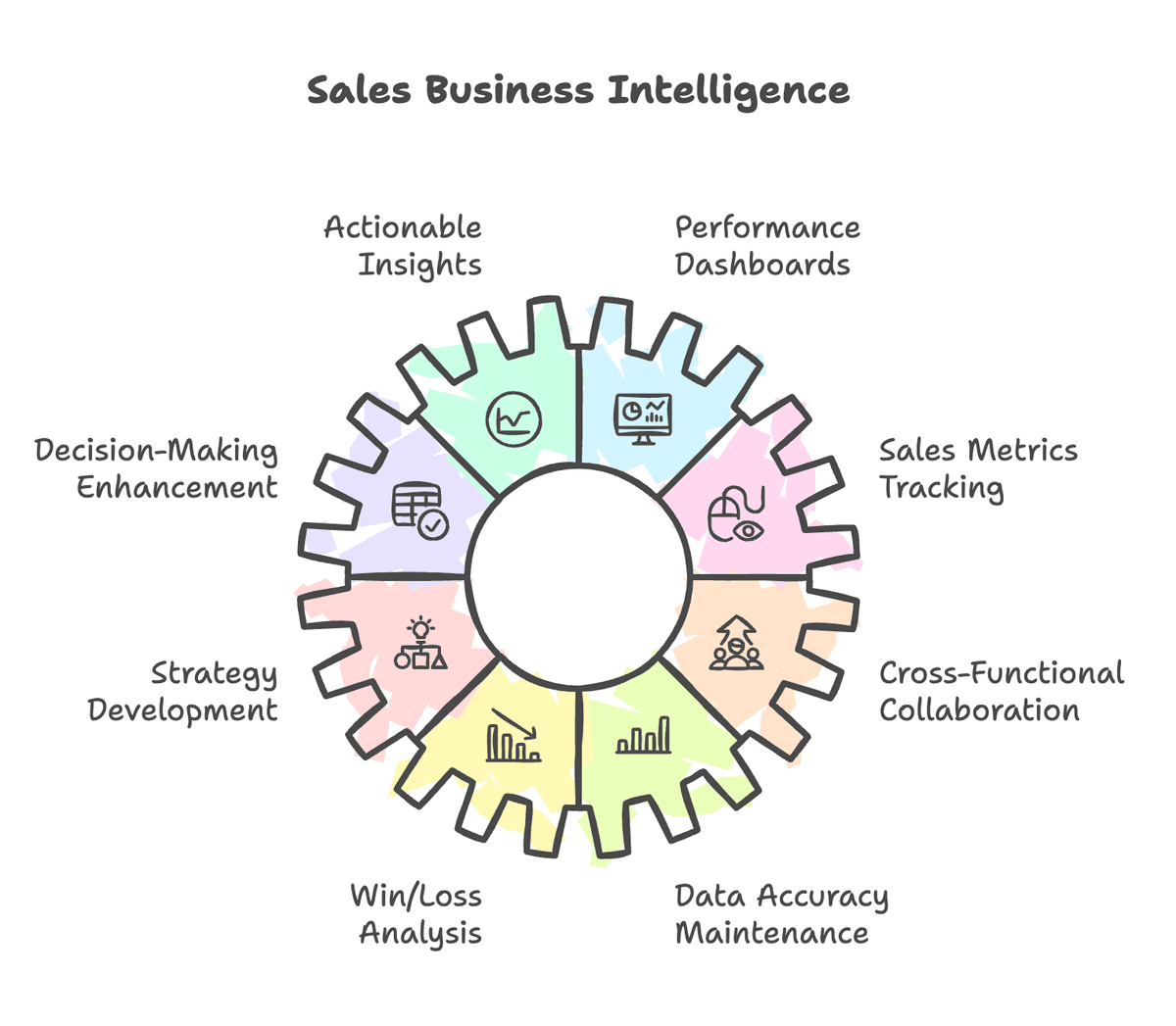
Provide Actionable Insights
- Analyze performance data to identify trends, strengths, and areas for improvement, then deliver tailored recommendations.
Create Performance Dashboards
- Design and maintain real-time KPI dashboards accessible to reps and managers.
Enhance Decision-Making with Data
- Translate complex data into clear reports for sales and executive teams.
- Help prioritize efforts by identifying high-value opportunities and accounts.
Track and Monitor Sales Metrics
- Measure KPIs such as conversion rates, average deal size, and customer acquisition costs.
- Review performance against benchmarks to spot gaps and opportunities.
Support Sales Strategy Development
- Use data insights to guide targeting, resource allocation, and market choices.
- Align reporting with organizational objectives to track progress effectively.
Collaborate with Cross-Functional Teams
- Share analytical insights with marketing, finance, and product to drive alignment.
Conduct Win/Loss Analysis
- Analyze why deals are won or lost to refine messaging, targeting, and negotiation.
Maintain Data Accuracy and Integrity
- Audit data sources regularly and develop best practices across sales systems.
What Does Sales Operations Do?
Sales Training / Sales Enablement
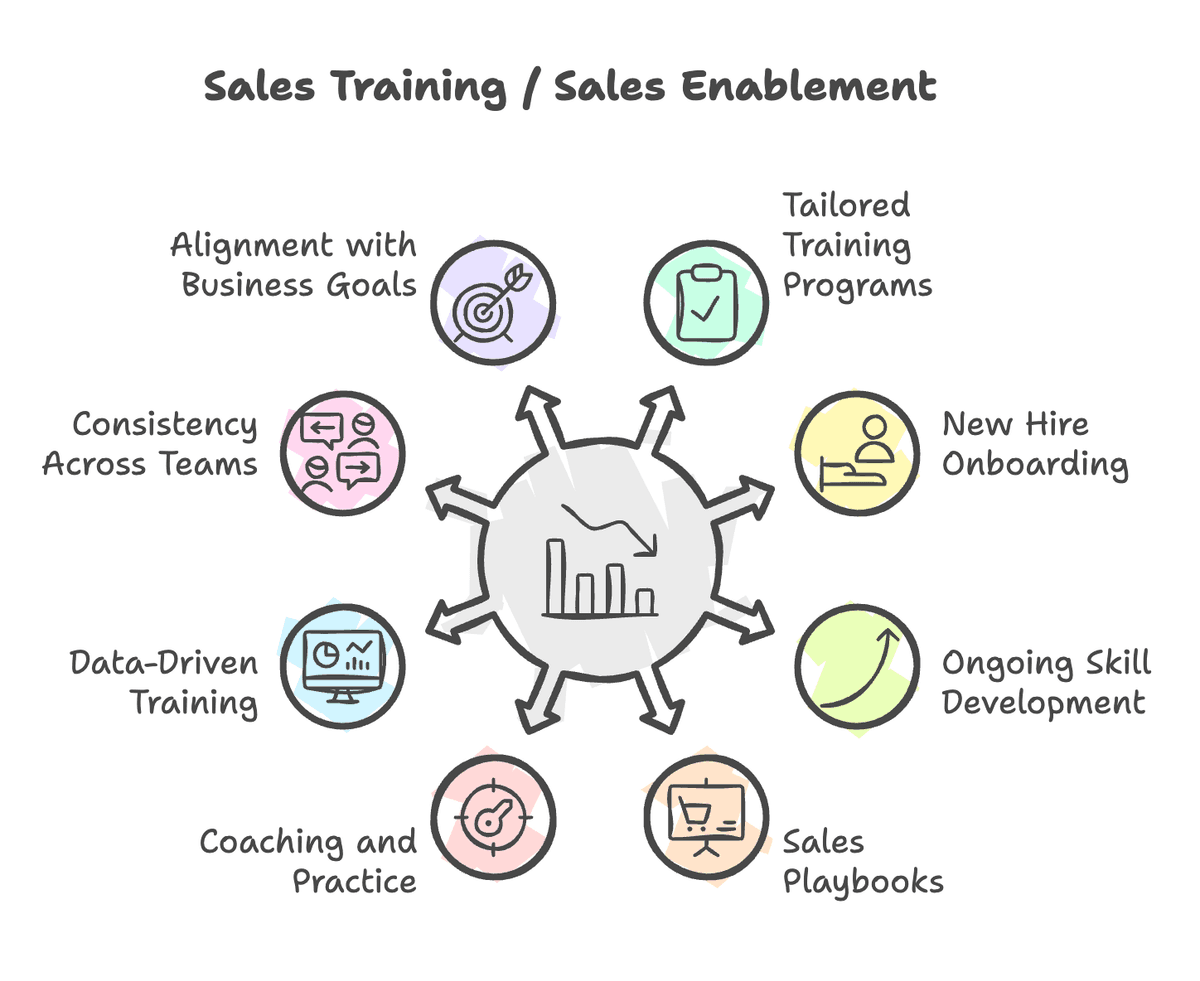
Develop Tailored Training Programs
- Design and deliver modules on core selling skills, product knowledge, and customer engagement.
Onboard New Sales Team Members
- Provide comprehensive programs that ramp new hires quickly on processes and tools.
Deliver Ongoing Skill Development
- Offer regular sessions on advanced skills (e.g., negotiation, objection handling) and sales technology.
Equip Teams with Sales Playbooks and Resources
- Maintain playbooks and ensure access to up-to-date collateral, such as case studies and marketing materials.
Provide Coaching and Scenario Practice
- Offer one-on-one coaching and role-plays to build confidence and mastery.
Leverage Data for Targeted Training
- Use performance metrics to identify gaps and personalize development.
Promote Consistency Across Teams
- Standardize messaging and methodology across regions and teams.
Ensure Alignment with Business Goals
- Tie enablement initiatives to measurable outcomes and strategic priorities.
What Does Sales Operations Do?
Sales Compensation and Incentives
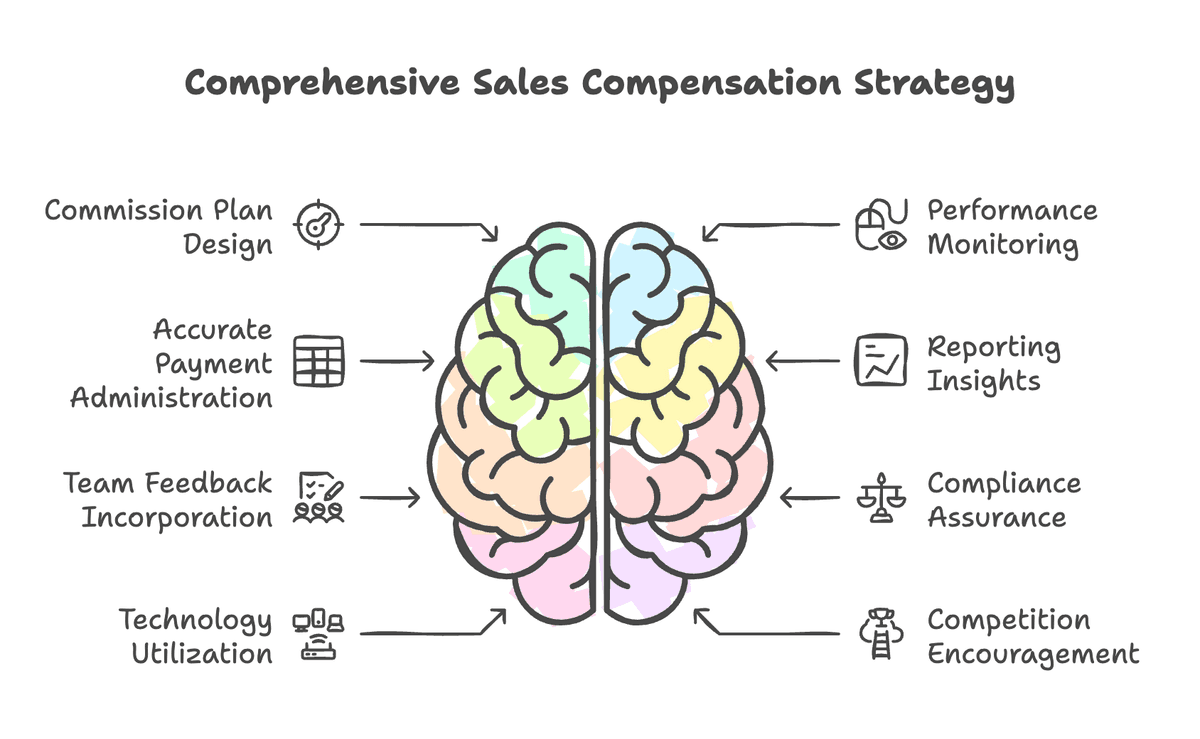
Design Commission Plans
- Create well-structured plans that motivate teams and align with revenue and profitability goals.
- Align incentives with business objectives (e.g., new customer acquisition, retention, cross-sell).
Monitor and Evaluate Plan Effectiveness
- Review performance data to validate outcomes and adjust as needed.
Administer Payments Accurately and Timely
- Oversee commission calculations and on-time payouts to build trust and morale.
Provide Insights Through Reporting
- Build dashboards for visibility into earnings, plan performance, and potential adjustments.
Incorporate Feedback from Sales Teams
- Collect input to improve plan design and practicality.
Ensure Compliance
- Adhere to labor laws, tax regulations, and company policies.
Leverage Technology
- Use compensation management tools to streamline calculations and enhance reporting accuracy.
Encourage Healthy Competition
- Use recognition programs, contests, or tiers to boost performance.
Conclusions — What Does Sales Operations Do?
Sales Operations plays a crucial role in driving the efficiency, productivity, and strategic alignment of a company’s sales function. By managing tools, processes, data, training, and compensation, this team ensures that sales professionals have the resources and insights needed to succeed. Acting as a bridge between departments and focusing on continuous improvement, Sales Operations helps align business goals with sales execution, creating a solid foundation for growth and success. For the full structure behind this function, explore the broader Sales Operations system.