What Is A Sales Lead?
What is a sales lead? Simply put, a current or potential customer has shown genuine interest in what you’re offering.
Part of the Sales Process hub: Sales Process.
Picture this: you run a growing digital marketing agency with a dedicated team of 15.
One of your existing clients, a local coffee chain, contacts you to ask about additional social media management services for their upcoming product launch.
Around the same time, a brand-new retail startup inquires about your SEO packages to help boost their online visibility.
Both companies have shown genuine interest in what you offer, making them sales leads who could become loyal clients if you nurture the relationship and guide them toward a successful partnership.
Sales leads can come from previous customers looking for another purchase or completely new prospects who discover you online, hear about you through friends, or stop by your booth at a conference.
Your core responsibility is to respond to the question, "What is a sales lead?" for your business. Then, nurture the relationship and guide the customer through your sales process until they’re ready to buy.
Remember that turning a lead into a loyal customer goes beyond a one-time sale. You need to understand their needs, deliver consistent value, and keep building the relationship so they return and, hopefully, bring others along.
What Is A Sales Lead And How Is It Different Than An Opportunity?
A lead is anyone who initially shows interest in your product or service. Once you’ve qualified that lead—confirming they have a genuine need, a potential budget, and a solid fit for what you offer—they become an opportunity, or in other words, a vetted lead with strong buying potential.
Your sales process then guides both leads and opportunities from first contact (lead) through more profound discovery and alignment (opportunity), all the way to negotiation and finally closing the deal.
In short, leads can evolve into opportunities, and opportunities, when managed effectively, become sales—and, ideally, loyal customers.
Keeping Your Sales Flowing
The Importance of Managing Sales Leads
Sales leads are the lifeblood of any business. They keep your sales pipeline full and your revenue growing. Imagine your sales leads as the seeds in your garden—you need to nurture them properly to watch your business bloom!
However, businesses often stumble when following up with these leads. Let’s explore why this happens and how to turn those missed opportunities into thriving relationships.
Why Leads Slip Through the Cracks
- Overloaded teams: Sales reps juggling too many tasks may miss follow-ups or delay responses, allowing leads to go cold.
- Long conversion cycles: Turning a lead into an opportunity takes time. Without structure, leads may disengage before value is established.
- Incomplete or unclear information: Vague inquiries or missing details make it difficult to assess fit and prioritize next steps.
- Incorrect lead assignment: Sending leads to the wrong team or role reduces conversion chances and frustrates prospects.
- Poor tracking systems: Without a CRM, interactions and follow-ups are easily lost.
- Delayed communication: Slow or inconsistent follow-up signals low urgency and pushes leads toward competitors.
Best Practices to Turn Leads into Sales
- Use a structured lead management system: A CRM helps prioritize, track, and automate follow-ups so no lead is forgotten.
- Route leads to the right experts: Match prospects with sellers who understand their needs and context.
- Standardize your follow-up process: Define clear steps for emails, calls, demos, and next actions.
- Qualify early and clearly: Ask the right questions up front to avoid wasted effort later.
- Respond quickly and consistently: Speed builds trust and keeps momentum alive.
- Align sales and marketing: Shared definitions and handoffs create a seamless buyer experience.
- Train your sales team regularly: Well-trained sellers handle leads with confidence and clarity.
- Measure and refine continuously: Track conversion rates, response times, and outcomes to improve performance.
By addressing these common challenges with these best practices, you can transform your lead management process from a chaotic garden to a well-tended oasis. Nurture your leads with care, stay organized, and watch your sales—and customer relationships—flourish!
Qualifying A Lead
BANT—Budget, Authority, Need, Timeline, and Solution—is a handy methodology for classifying leads. Applying BANTS is like having a friendly roadmap that helps you determine whether someone is truly ready to buy.
- Budget: Can the lead afford your solution?
- Authority: Are you speaking with a decision-maker?
- Need: Does your offering solve a real problem for them?
- Timeline: When are they planning to make a decision?
Following these five friendly steps, you can focus on the leads most likely to become happy, loyal customers.
In Summary, What Is A Lead?
The question, "What is a sales lead?" is simple to answer: sales leads are the lifeblood of any business. They represent current or potential customers who are genuine about your products or services.
Whether they come from existing clients seeking more offerings or new prospects discovering you online or at events, effectively managing these leads is crucial for sustaining and growing your sales pipeline.
However, many businesses face challenges following up with leads due to factors such as busy teams, unclear lead information, improper lead assignment, and inadequate tracking systems.
To overcome these obstacles, best practices, such as a solid lead management system, assign leads to the right experts, streamline follow-ups, and foster collaboration between sales and marketing teams, must be implemented. By nurturing leads thoughtfully and systematically, you can turn initial interest into loyal, long-term customers, driving sustained business growth.
Next read
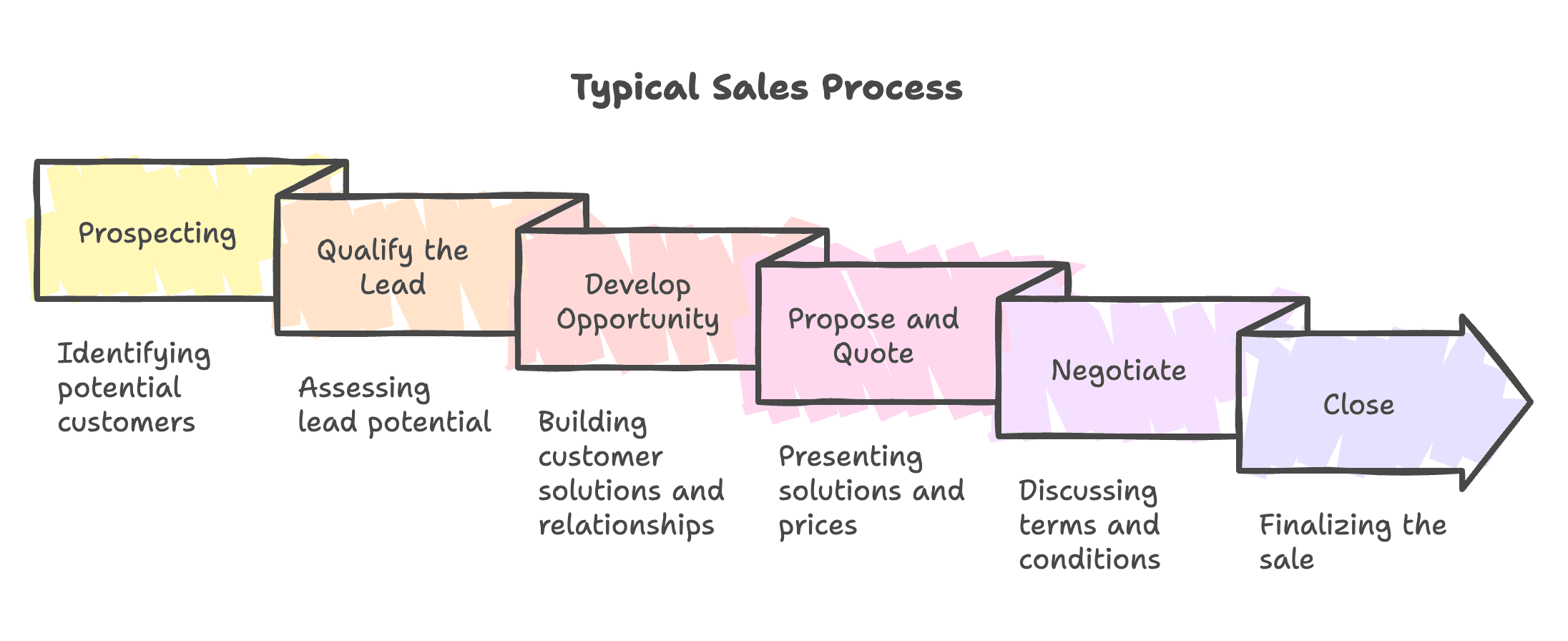
Here you will find what is a sales process, and develop a framework to increase your sales producti…

Designing the steps in a sales process is the first step to improve your sales productivity.

What is Sales Pipeline Management? Sales pipeline management is the process of tracking and organiz…