Module 3: Analyzing Your Market & Customers
Why Market And Customer Analysis Matters
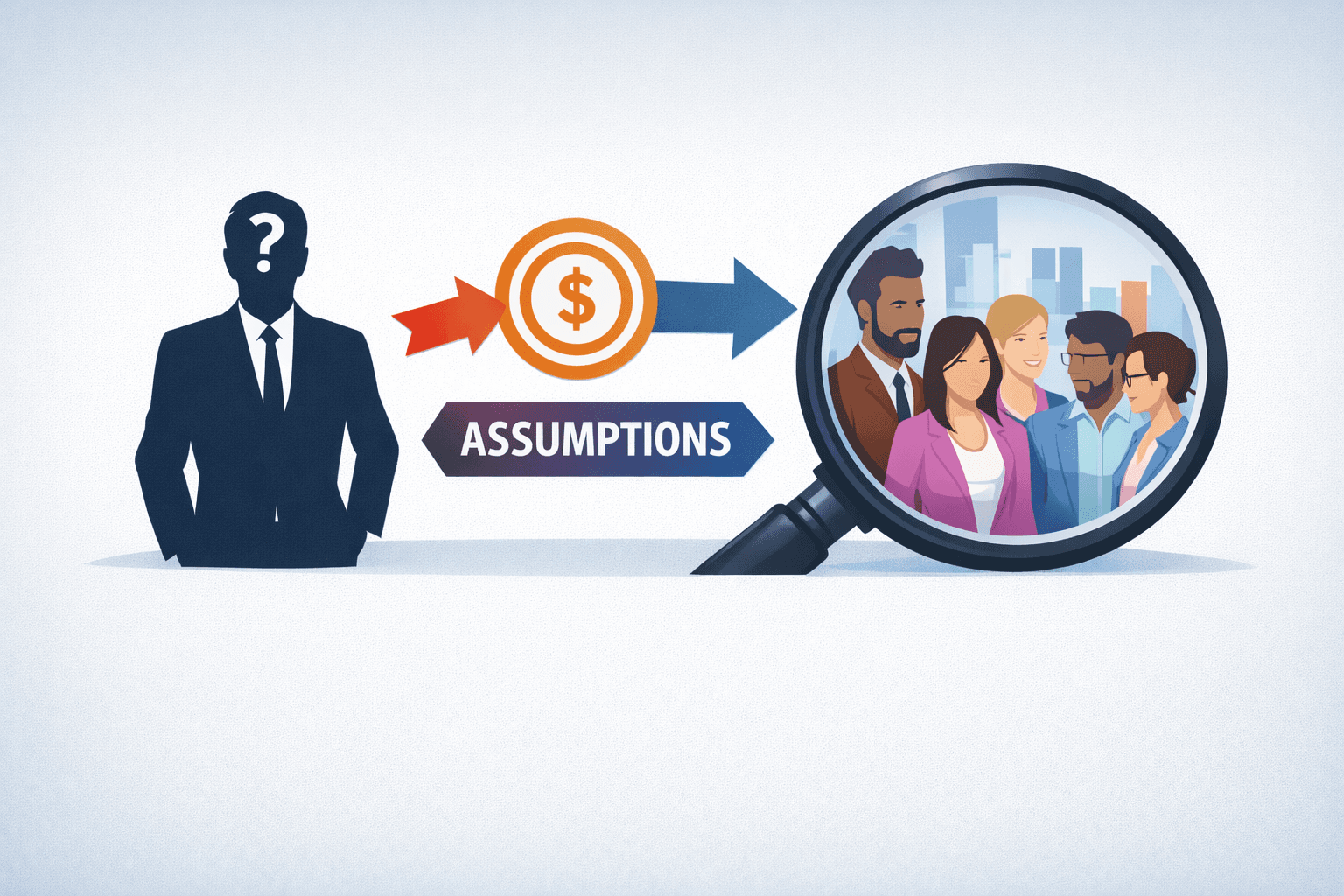
From Assumptions to Market Reality
Many sales strategies struggle because they reflect how the company thinks — not how customers decide.
Understanding your market and customers allows you to:
- Focus on the right customers
- Align sales activity to real buying needs
- Compete on value instead of price
Where Sales Strategies Go Wrong
When everyone is your target, sales focus is lost. Teams spread effort thin and results suffer.
Strategy built only from internal perspectives often misses what customers truly value.
Differentiation fails when it is based on features customers don’t care about.
Defining Your Ideal Customer Profile

Who You Serve Best
Your Ideal Customer Profile (ICP) defines the type of customer where your company delivers the most value — and wins most consistently.
A strong ICP helps sales teams prioritize the right opportunities and avoid unprofitable deals.
Examples of Core Factors That Define Your Customers
Segmenting Your Market
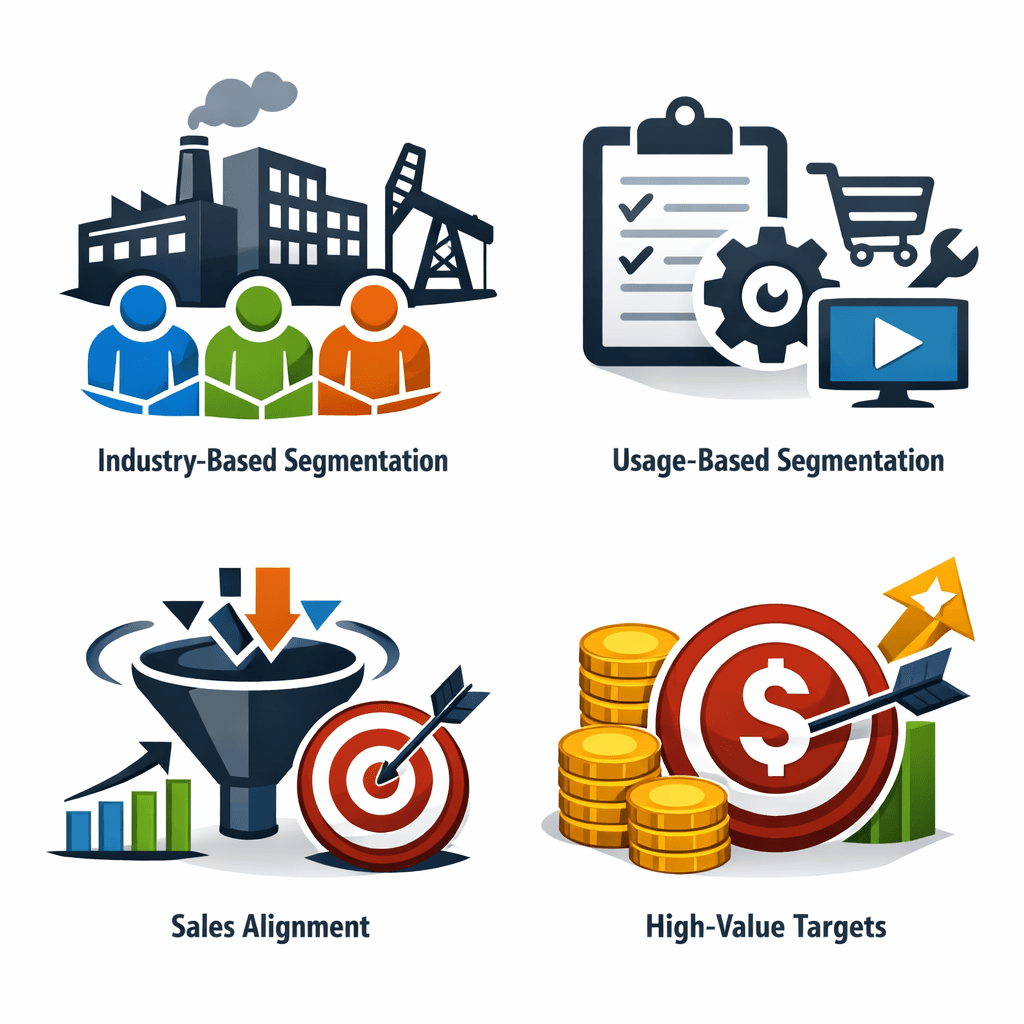
Segmentation Starts With the Customer
Effective segmentation reflects how the market sees itself — not how your company is organized.
Customers don’t buy by product line, department, or internal team.
They group themselves by industry context, use case, maturity, and value expectations.
Strong segmentation aligns sales effort to customer reality, making segments actionable, comparable, and scalable.
Click below for segmentation examples!
Group customers by industry to tailor messaging and expertise.
Examples:
- Manufacturing
- Healthcare
- Financial Services
- Technology / SaaS
Segment by how customers use your product or service.
Examples:
- Cost reduction
- Compliance and risk management
- Revenue growth
- Operational efficiency
Align sales motion to customer readiness and sophistication.
Examples:
- Early-stage: problem aware, exploring options
- Mid-stage: comparing solutions
- Advanced: optimizing or scaling an existing solution
Focus effort on segments with the highest revenue or strategic impact.
Examples:
- High lifetime value customers
- Strategic accounts
- High-growth customers
- Multi-product or enterprise accounts
Understanding Customer Needs
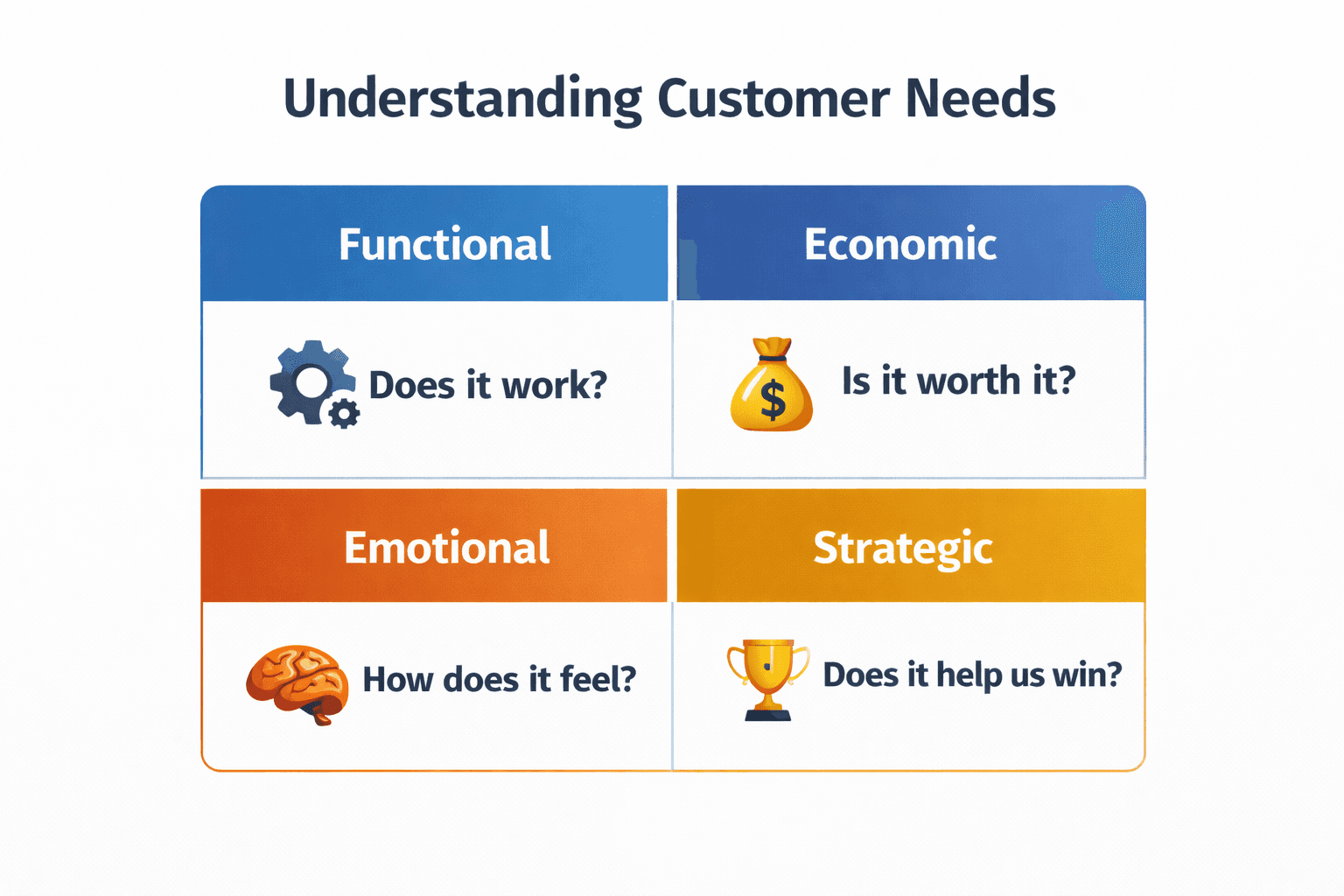
What Customers Are Really Buying
Customers don’t buy products — they buy outcomes.
Understanding needs allows sales teams to move beyond features and connect to what truly matters.
Click below for Customer Needs details!
Competitive Differentiation That Matters
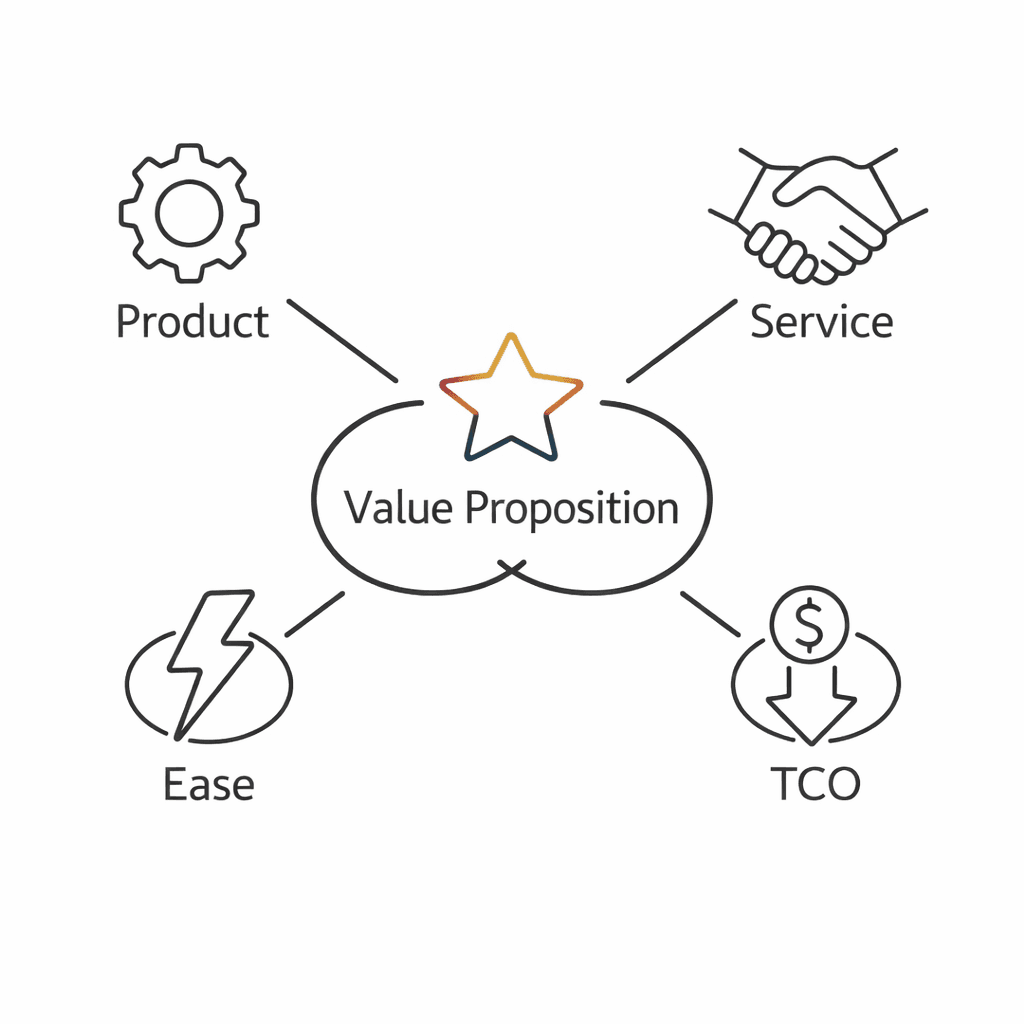
Value Proposition
Effective differentiation connects what you do best with what customers value most.
Not all differences matter — focus on those that influence buying decisions.
Click each card to see examples of differentiation characteristics.
Unique features or performance that customers value.
Reliability, responsiveness, and post-sale experience.
Simplicity, speed, and reduced friction throughout the buying journey.
Long-term cost impact beyond the initial price.
Bringing It All Together
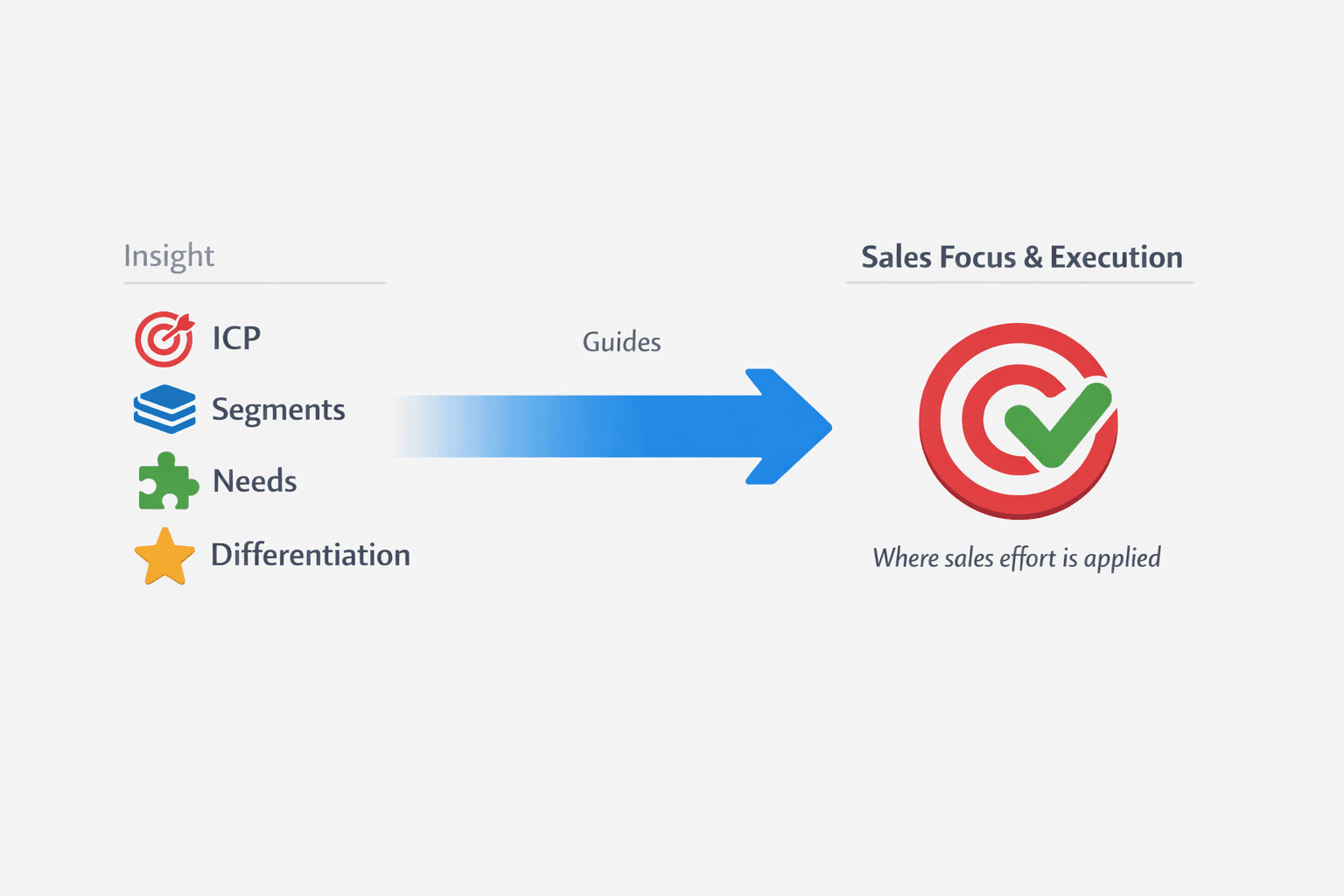
From Insight to Action
Market and customer insights only create value when they guide sales focus and execution.
This module connects the dots between ICP, segments, needs, and differentiation.
Click below each card to bring it all together!
Insights only matter when they shape daily sales behavior.
When ICP, priority segments, customer needs, and differentiation are clearly defined, sales teams know who to pursue, what to lead with, and how to win—turning strategy into consistent, focused execution.
Module Summary
Key Takeaways
- Focus sales effort on customers where you deliver the most value
- Use segmentation to prioritize and tailor your sales approach
- Anchor differentiation in real customer needs
- Align market insight directly to sales execution