๐Ÿ‘€

Preview Mode

You're viewing a sample. Enroll to access the full module.

View Full Course
Strategic Foundation โ€ข Module 4

Module 4: Assessing Your Sales Organization

Why Assess Before You Improve
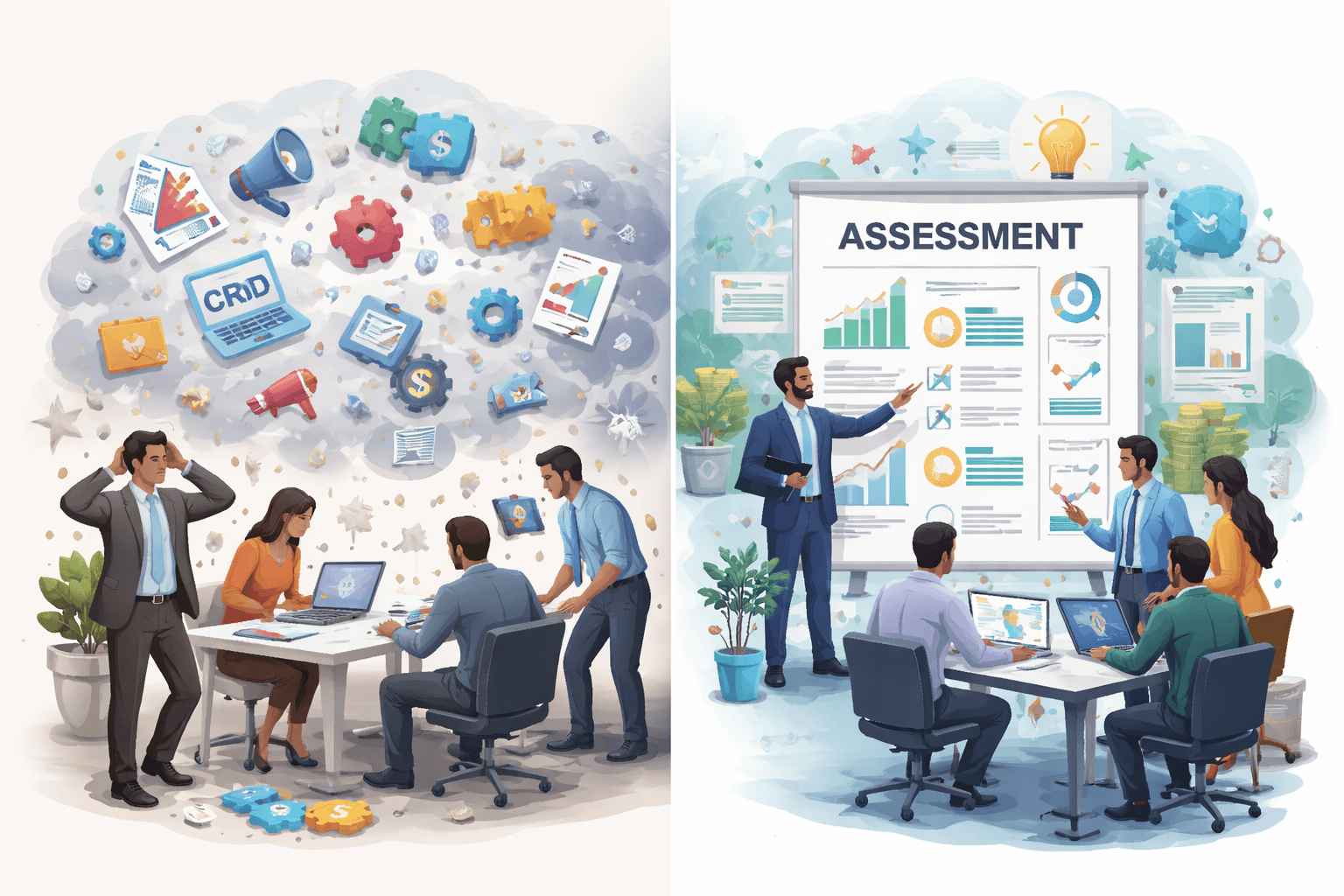
Assess before improve concept

Improvement without assessment creates noise

Sales organizations often jump straight to tools, training, or restructuring.

Without a clear baseline, these efforts lead to fragmented improvements, inconsistent adoption, and limited impact.

Assessment creates clarity, focus, and alignment before action.


The Sales Capability Assessment Framework
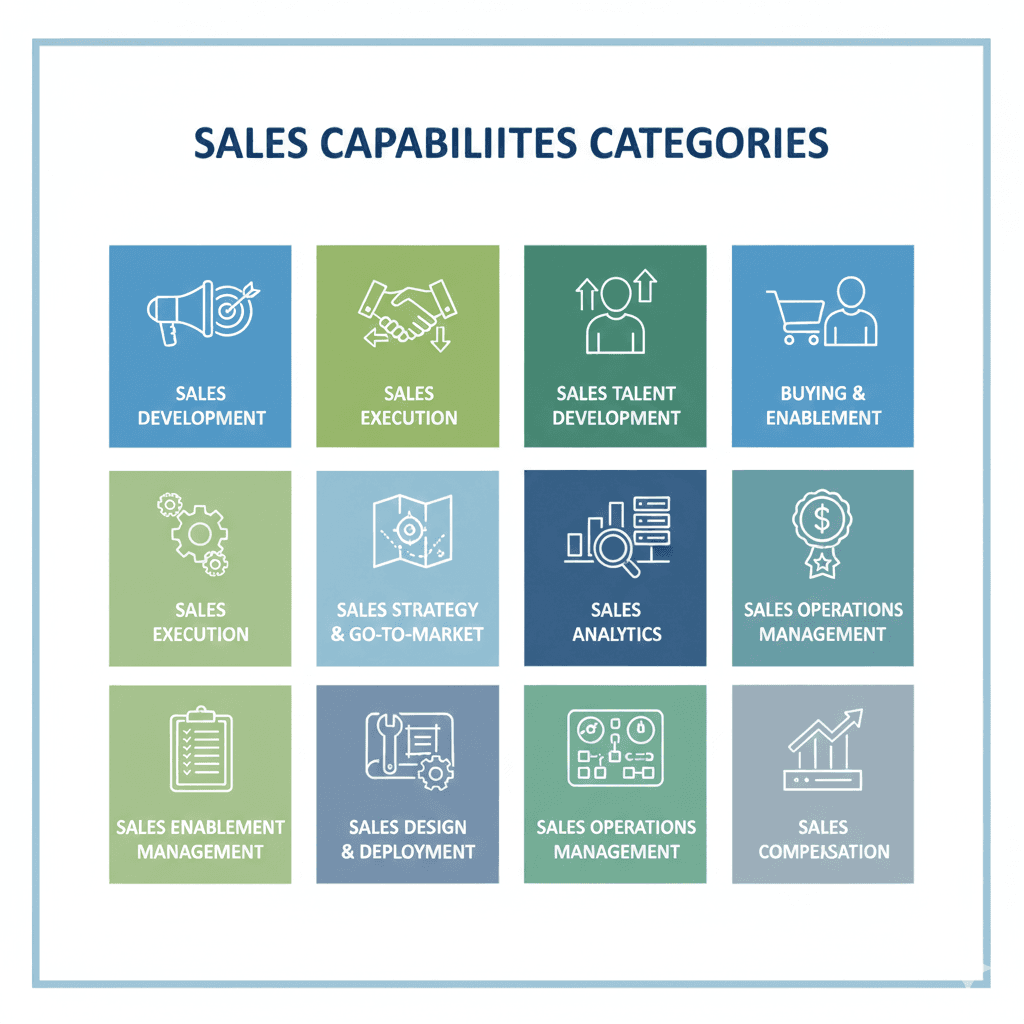
Sales capability assessment framework

A structured way to evaluate your sales organization

This framework evaluates sales effectiveness through capabilities, not symptoms.

Each capability is assessed through a People, Process, and Technology lens.

Click each card to learn what this capability area evaluates.

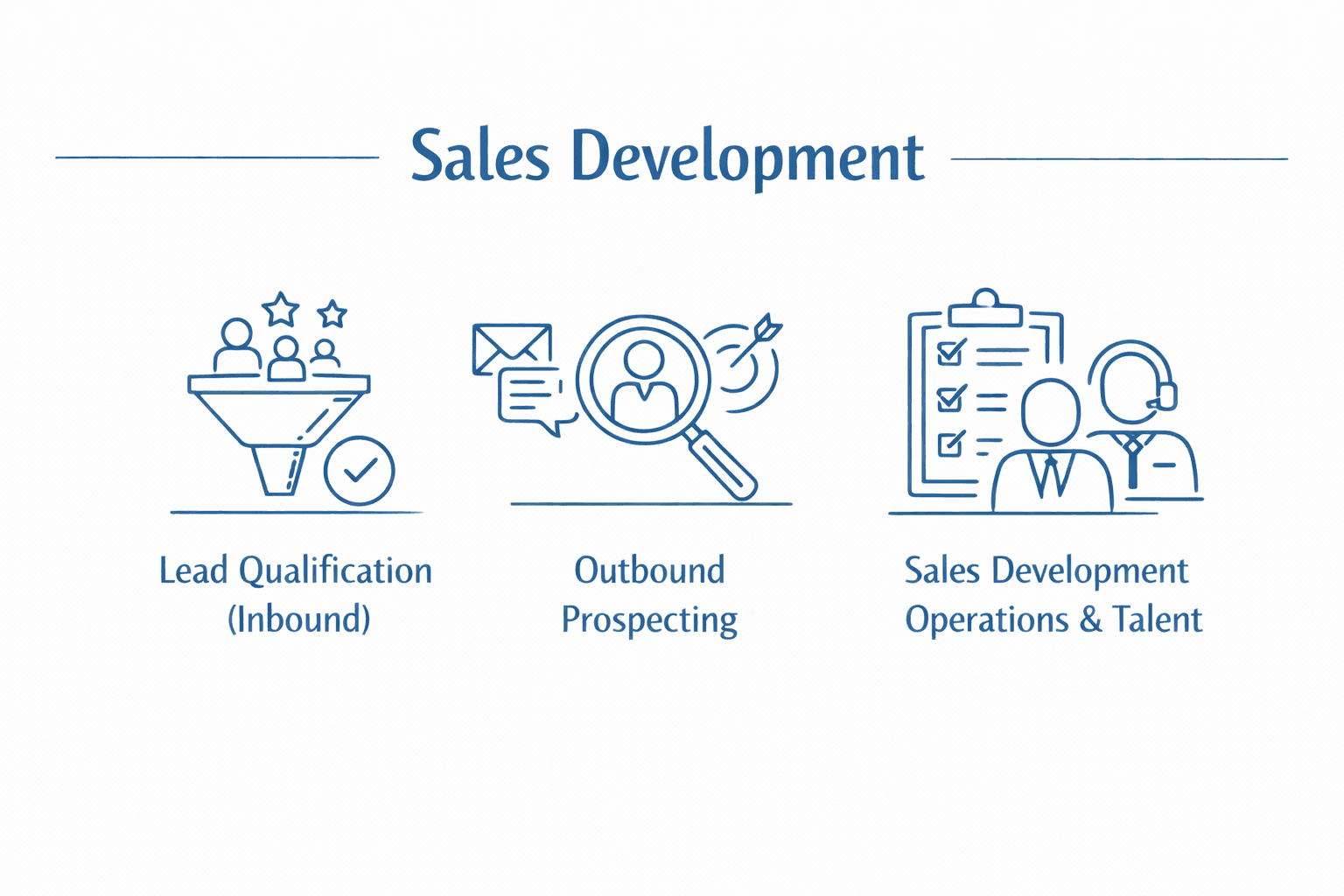
Creating pipeline

๐Ÿš€

How the organization qualifies inbound demand, executes outbound prospecting, and scales SDR talent to consistently create pipeline.

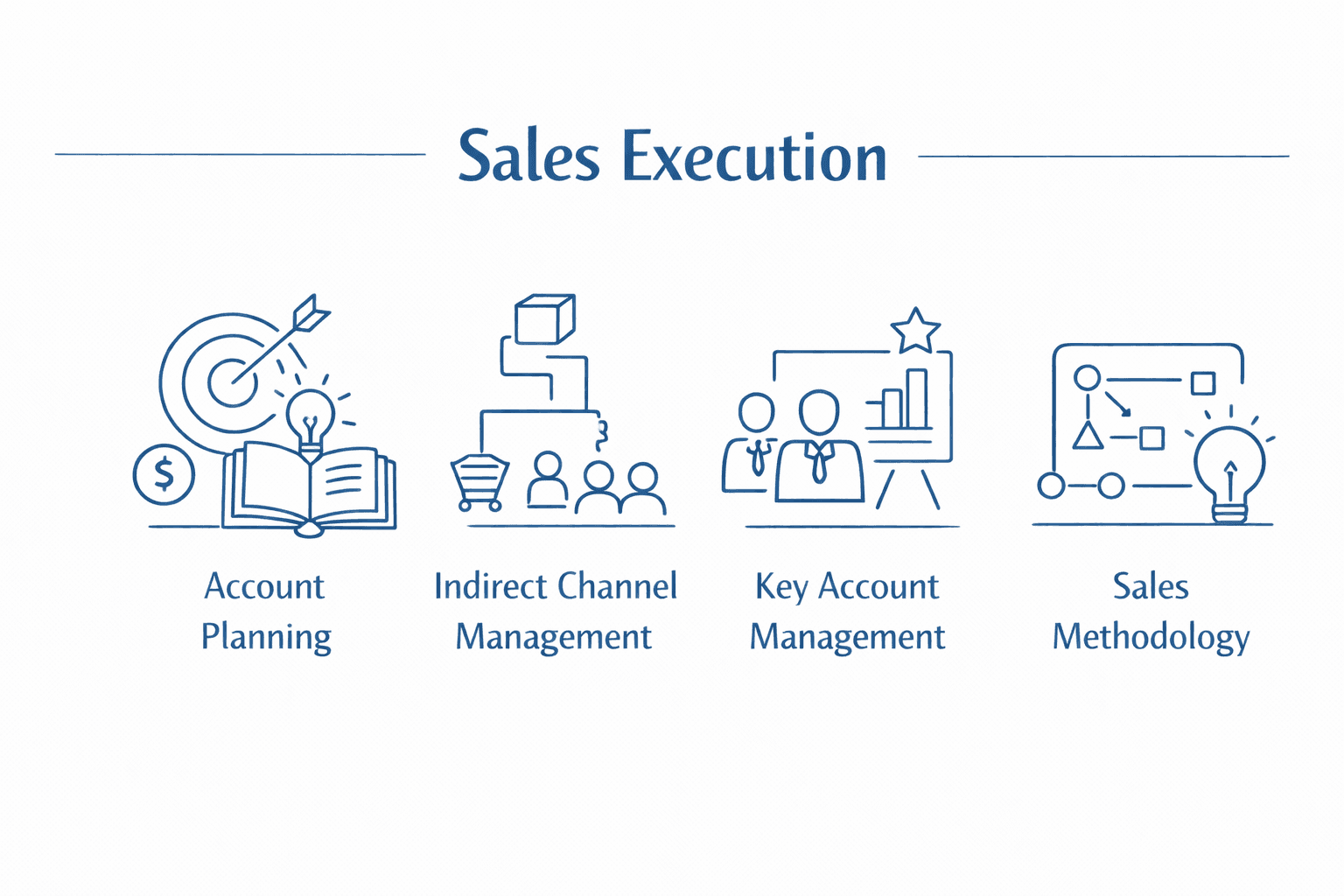
Winning and growing accounts

๐Ÿค

How sellers execute account planning, manage key accounts, work channels, and apply a sales methodology to close and expand business.

Where and how to compete

๐ŸŒ

How routes to market, channel mix, and strategic planning align resources to priority customer segments and growth opportunities.

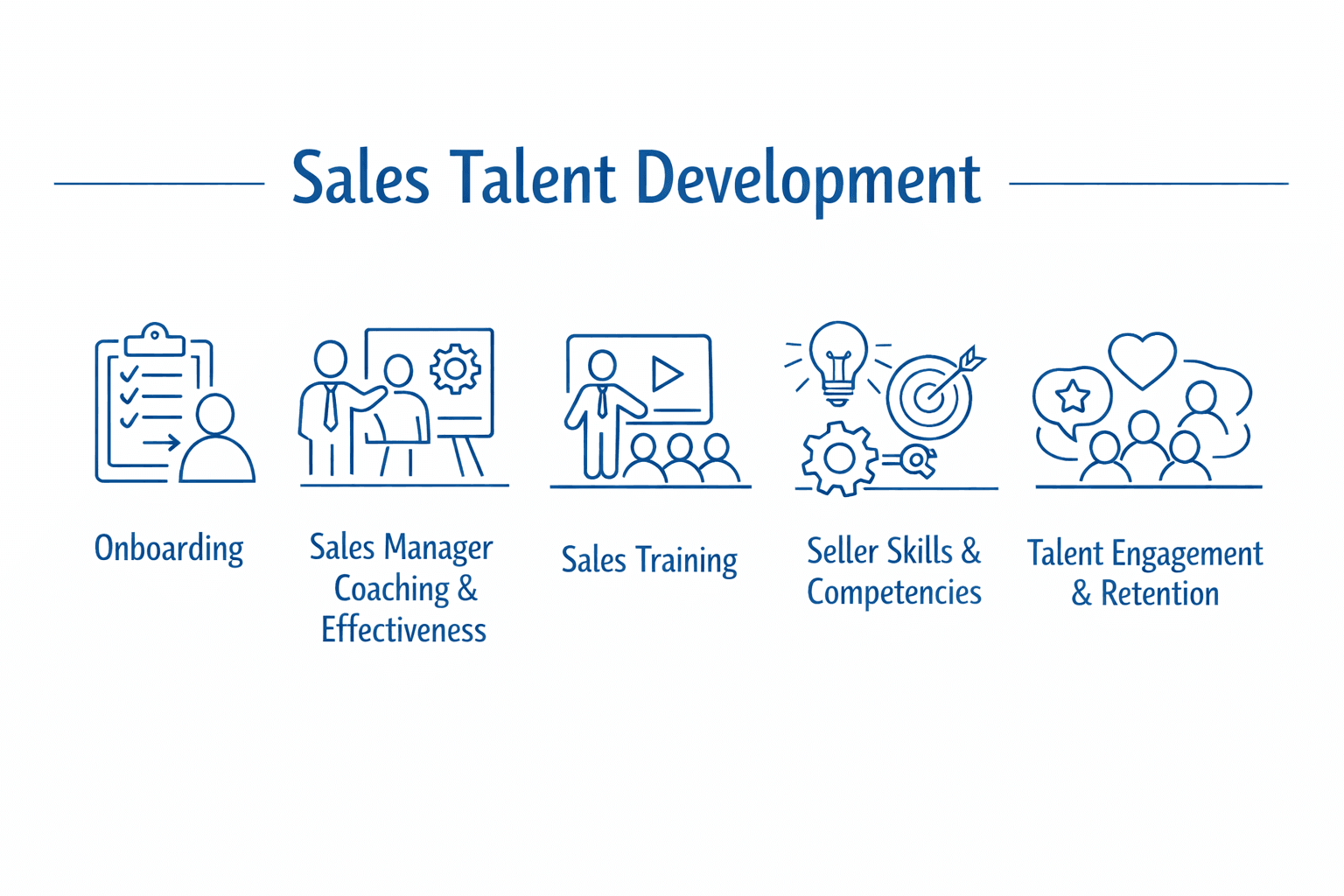
Building seller capability

๐ŸŽ“

How onboarding, training, coaching, and competency models develop sellers and managers to perform consistently at scale.

Enabling buyers and sellers

๐Ÿงญ

How content, messaging, and sales processes support customers through buying jobs and help sellers guide decisions.

Enablement execution model

๐Ÿ—๏ธ

How enablement is structured, led, and measured to ensure programs, tools, and communications drive seller outcomes.

Coverage and capacity

๐ŸŽฏ

How roles, territories, segmentation, and headcount are designed to align selling capacity with market opportunity.

Insight and visibility

๐Ÿ“Š

How CRM, analytics, governance, and forecasting provide insight, improve decision-making, and support coaching.

Orchestrating execution

๐Ÿง 

How sales operations structure, strategy, and stakeholder management connect strategy to execution across functions.

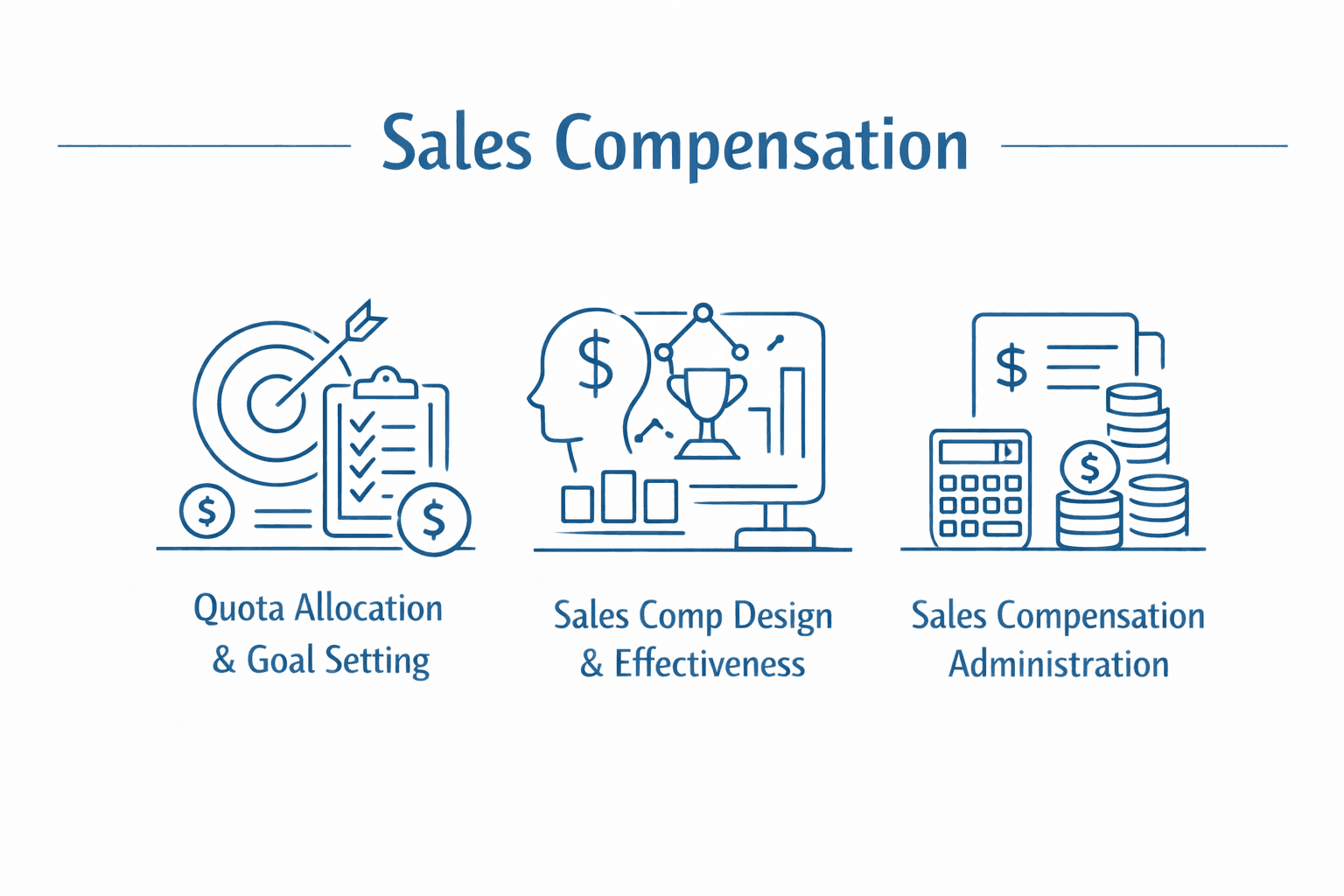
Reinforcing behavior

๐Ÿ’ฐ

How quotas, incentives, and payout operations motivate sellers and reinforce the organizationโ€™s sales strategy.


Assessing Buying And Selling Enablement
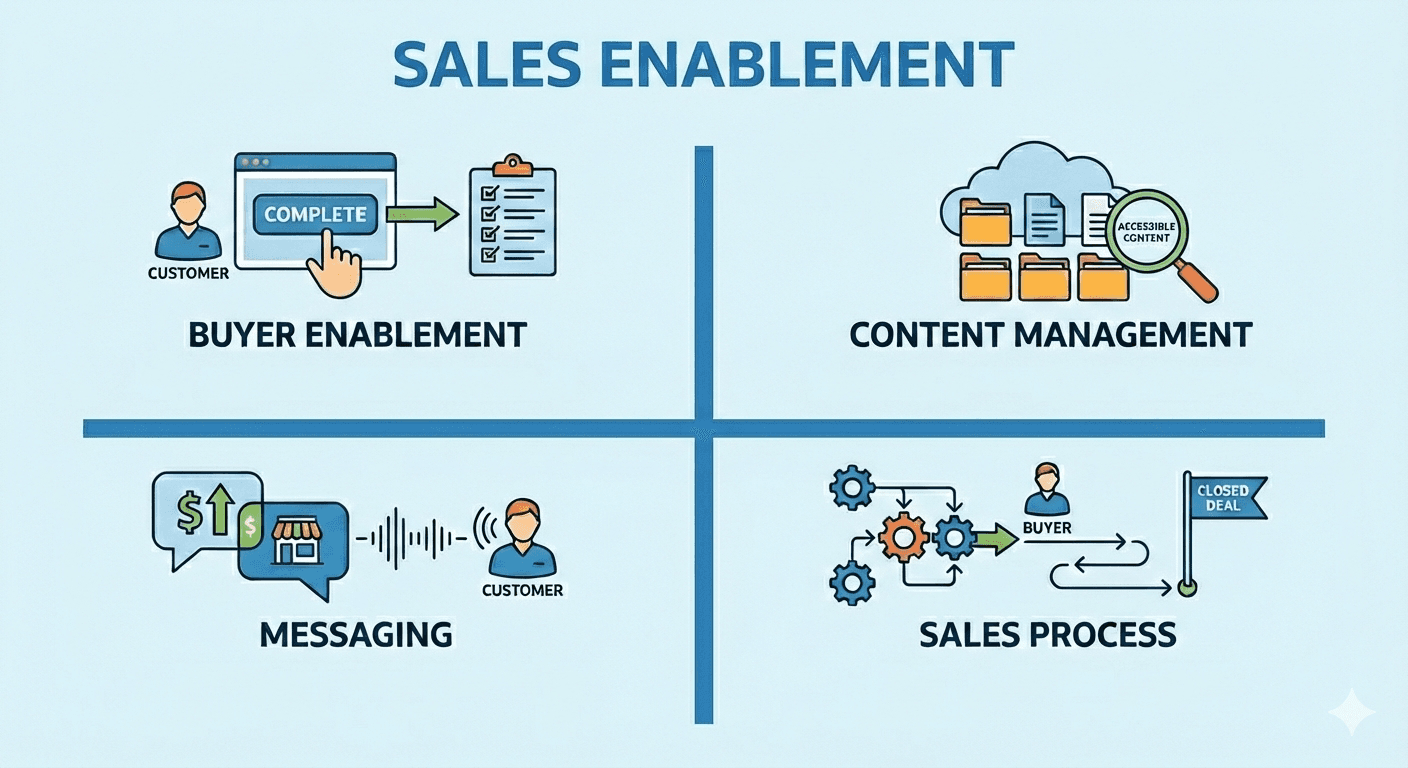
Buyer enablement, content management, sales messages, sales process

Enable buyers while enabling sellers

Strong enablement aligns how customers buy with how sellers sell.

Click each card to see how enablement maturity progresses from Levels 1โ€“2 to Levels 4โ€“5.

Levels 1โ€“2: Content is created for sellers, not buyers, and shared reactively.
Level 3: Buyers can independently use enablement content aligned to buying jobs.
Levels 4โ€“5: Personalized, analytics-driven buyer enablement is proactively delivered.
Levels 1โ€“2: Files are stored locally or in basic repositories with limited structure.
Level 3: Centralized, governed library supports easy discovery and reuse.
Levels 4โ€“5: CRM-integrated content with analytics-driven recommendations.
Levels 1โ€“2: Seller messages vary widely and rely on individual experience.
Level 3: Differentiated, standardized messaging anchors seller conversations.
Levels 4โ€“5: Messages are persona-based, tested with customers, and continuously refined.
Levels 1โ€“2: Processes are informal and inconsistently followed.
Level 3: Sales process aligns to buyer journey and is measured in CRM.
Levels 4โ€“5: Adaptive, multi-path processes reflect non-linear buying behavior.

Assessing Sales Talent Development

Sales talent development capabilities

Building skills that scale

Talent development determines how quickly your strategy turns into consistent performance.

Use the maturity scale to identify whether development is ad hoc, repeatable, or optimized.

Click each card to understand how talent development capabilities mature across the five levels.

Levels 1โ€“2: Onboarding focuses on admin tasks and systems; curriculum lacks a clear journey.
Level 3: Clear, verifiable milestones and expectations exist at key ramp points.
Levels 4โ€“5: Just-in-time learning plus networks, peer coaching, and incentives shorten time-to-productivity.
Levels 1โ€“2: Managers provide oversight and track performance; coaching is limited or inconsistent.
Level 3: Managers invest significant time in skill-building, coaching, and open dialogue.
Levels 4โ€“5: Managers enable collaboration, innovation, and high autonomy with strong mutual support.
Levels 1โ€“2: Basic selling and product training occurs, but application and reinforcement are limited.
Level 3: Role-based curriculum includes advanced skills and experiential learning in the workflow.
Levels 4โ€“5: Gamified certifications and post-event measurement systematically improve retention and application.
Levels 1โ€“2: No formal competency model; managers decide what to coach and expectations vary.
Level 3: Competencies are assessed objectively and embedded into talent processes.
Levels 4โ€“5: Competencies evolve (including virtual-first and advanced skills) and promotions reflect mastery.
Levels 1โ€“2: Engagement is measured via surveys; manager quality is monitored but actions vary.
Level 3: Key drivers of acceptance and engagement are benchmarked and adjusted routinely.
Levels 4โ€“5: Talent audits, mobility, and EVP improvements stay ahead of market trends and competition.

Assessing Sales Enablement Management
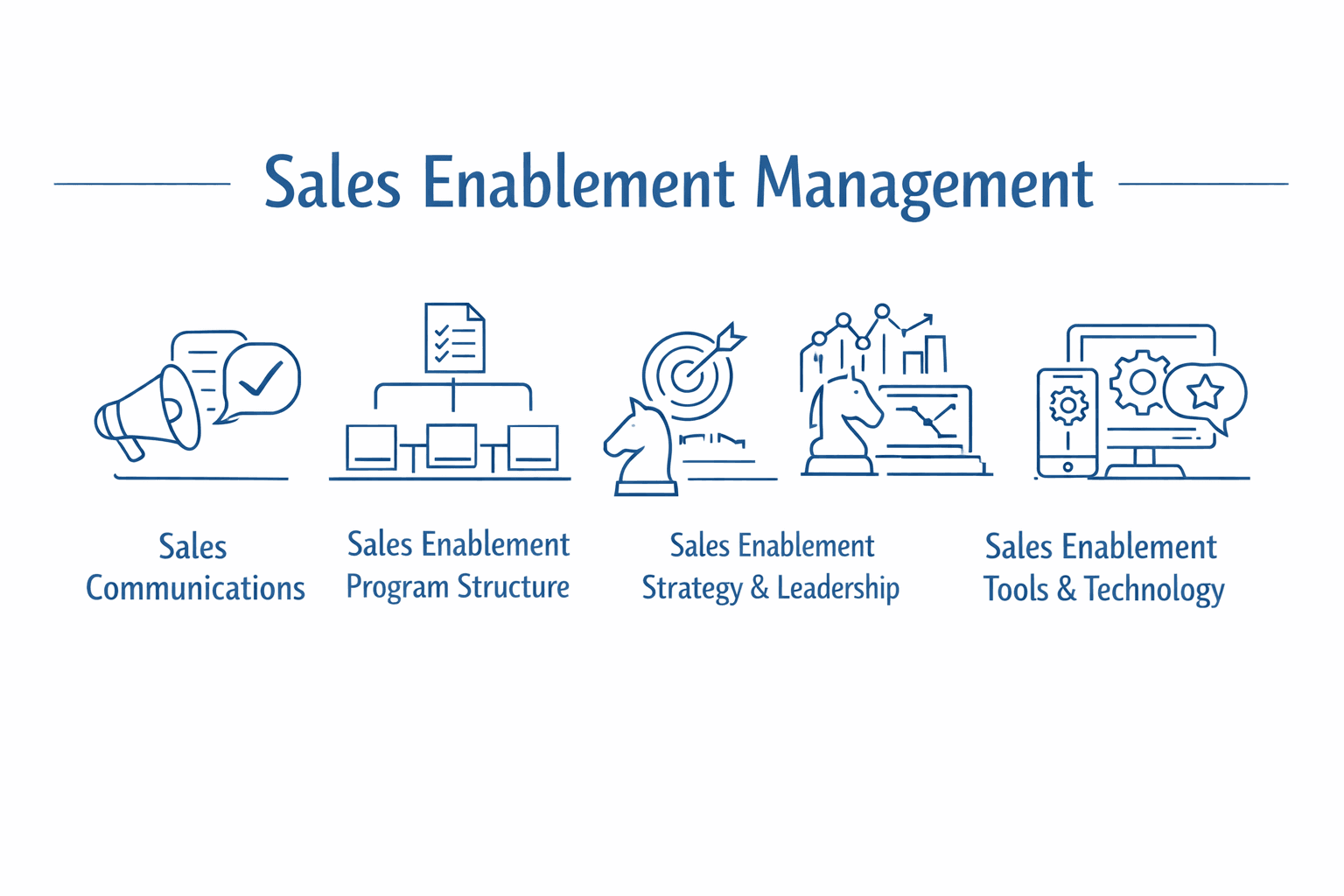
Sales enablement capabilities

Enablement as a system, not activities

Enablement maturity is reflected in how well programs, tools, and communications are planned, targeted, and measured.

Click each card to see what strong enablement looks likeโ€”and how to progress to higher maturity.

Levels 1โ€“2: Messages are sent as needed with limited prioritization or audience targeting.
Level 3: Communications are tailored to specific audiences with a planned cadence.
Levels 4โ€“5: Central coordination across channels prioritizes messages to avoid overwhelming sellers.
Levels 1โ€“2: Enablement responsibilities exist, but are part-time or unclear across roles.
Level 3: Dedicated enablement function with a charter covering onboarding, training, and content.
Levels 4โ€“5: Enterprise reach with cross-functional influence and regular performance assessment to improve quality.
Levels 1โ€“2: Enablement plans are informal and loosely aligned to company objectives.
Level 3: Formal enablement strategy standardizes and scales key sales processes; adoption is tracked.
Levels 4โ€“5: Data-driven enablement supports all revenue roles and extends across the full buying journey.
Levels 1โ€“2: Tools are stored in existing apps or built ad hoc to support seller requests.
Level 3: Tools are embedded into seller workflows to reduce burden and improve execution.
Levels 4โ€“5: Enablement tools directly help customers advance the purchase with minimal seller guidance.

Assessing Sales Analytics And Systems
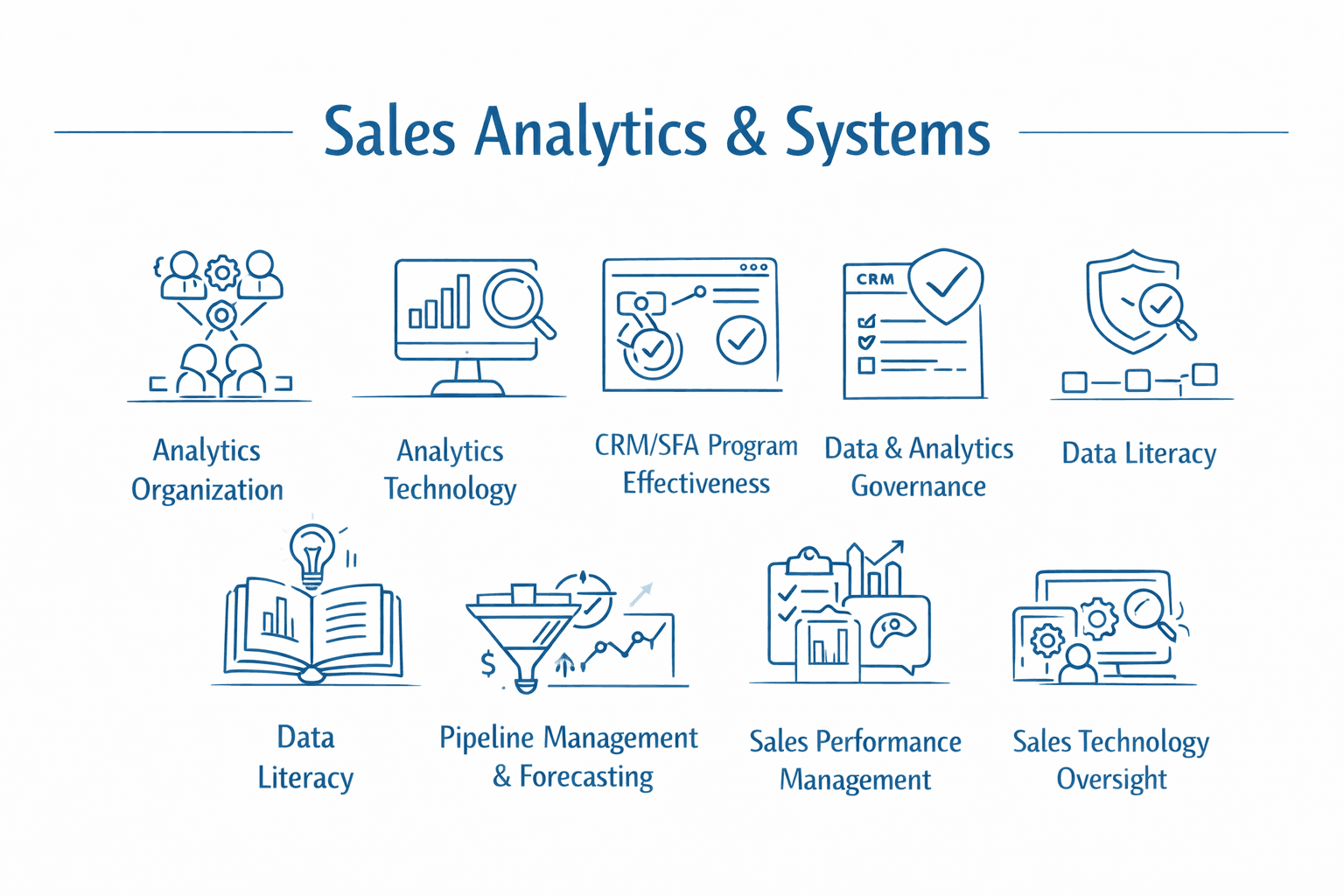
Sales analytics capabilities

Turning data into decisions

Analytics maturity shows up in trust, usability, and actionabilityโ€”not the number of dashboards.

Click each card to review capability maturityโ€”from ad hoc reporting to predictive, automated insight.

Levels 1โ€“2: Reports and analysis are built by generalists based on availability and individual skill.
Level 3: Dedicated analytics org with specialized analysts focuses on business impact and insight.
Levels 4โ€“5: High data literacy enables self-service; strong IT trust supports innovation and independence.
Levels 1โ€“2: Out-of-the-box reports are exported to spreadsheets for manual enhancement.
Level 3: Data science platform supports mining large datasets and building ML models for trends.
Levels 4โ€“5: Predictive analytics recommends next-best-action; AI/RPA and NLQ automate and simplify insight access.
Levels 1โ€“2: CRM is primarily for management; adoption is limited and relies on out-of-the-box features.
Level 3: CRM is embedded into workflows and improved based on end-user needs to drive adoption.
Levels 4โ€“5: Firm-wide standards enable a multi-channel buying experience with intelligent, prescriptive guidance.
Levels 1โ€“2: Governance is reactive and focused on fixing issues after they surface.
Level 3: Formal governance includes cross-functional participation and quality improvement.
Levels 4โ€“5: A dynamic roadmap adapts governance as literacy and analytics technology advance.
Levels 1โ€“2: Data literacy is not emphasized; ad hoc report requests dominate analytics work.
Level 3: Literacy is measured and improved; analytics informs decisions, not just validation.
Levels 4โ€“5: Data literacy is a core competency with a formal program and strategic advantage.
Levels 1โ€“2: Pipeline is partially tracked; standards are loose; forecasts rely on judgment and history.
Level 3: Standards are enforced with quality checks; analytics validates forecast submissions.
Levels 4โ€“5: AI flags inconsistencies and predictive analytics improves accuracy using market intelligence.
Levels 1โ€“2: Managers use outputs at their discretion; sales ops involvement is limited.
Level 3: Sales ops coordinates tools and process flows to support objective coaching and track improvements.
Levels 4โ€“5: Interactive longitudinal systems enable benchmarking and track manager impact on performance.
Levels 1โ€“2: Tools overlap and standards are basic; monitoring and IT partnership are limited.
Level 3: Sales ops screens requests and manages vendors based on business impact with IT partnership.
Levels 4โ€“5: Integrated tech stack adapts to strategy and retires tools based on ROI and fit.

Assessing Sales Compensation

Sales compensation capabilities

Incentives drive behavior

Compensation maturity depends on fairness, clarity, and operational trust.

Click each card to explore how compensation maturity improves fairness, clarity, and trust.

Levels 1โ€“2: Quotas are inconsistent or opaque; sellers feel goals are arbitrary or biased.
Level 3: Quotas cascade from a top-down forecast using rules of thumb and informal tools.
Levels 4โ€“5: Analytics-driven allocation tests fairness and aligns quotas to planning criteria.
Levels 1โ€“2: Plans are guided by judgment and assumptions; communication is mostly informational.
Level 3: Standard design cycle with governance and decision rights; stakeholder consultation is consistent.
Levels 4โ€“5: Evidence-based design integrates with strategy; sellers understand intent and calculation rules.
Levels 1โ€“2: Manual processes create errors; seller support is reactive and inconsistent.
Level 3: Published production calendar and specialist roles improve accuracy and timeliness.
Levels 4โ€“5: Defined standards and controls drive efficient, high-quality payouts with clear timelines.

Assessing Sales Design And Deployment
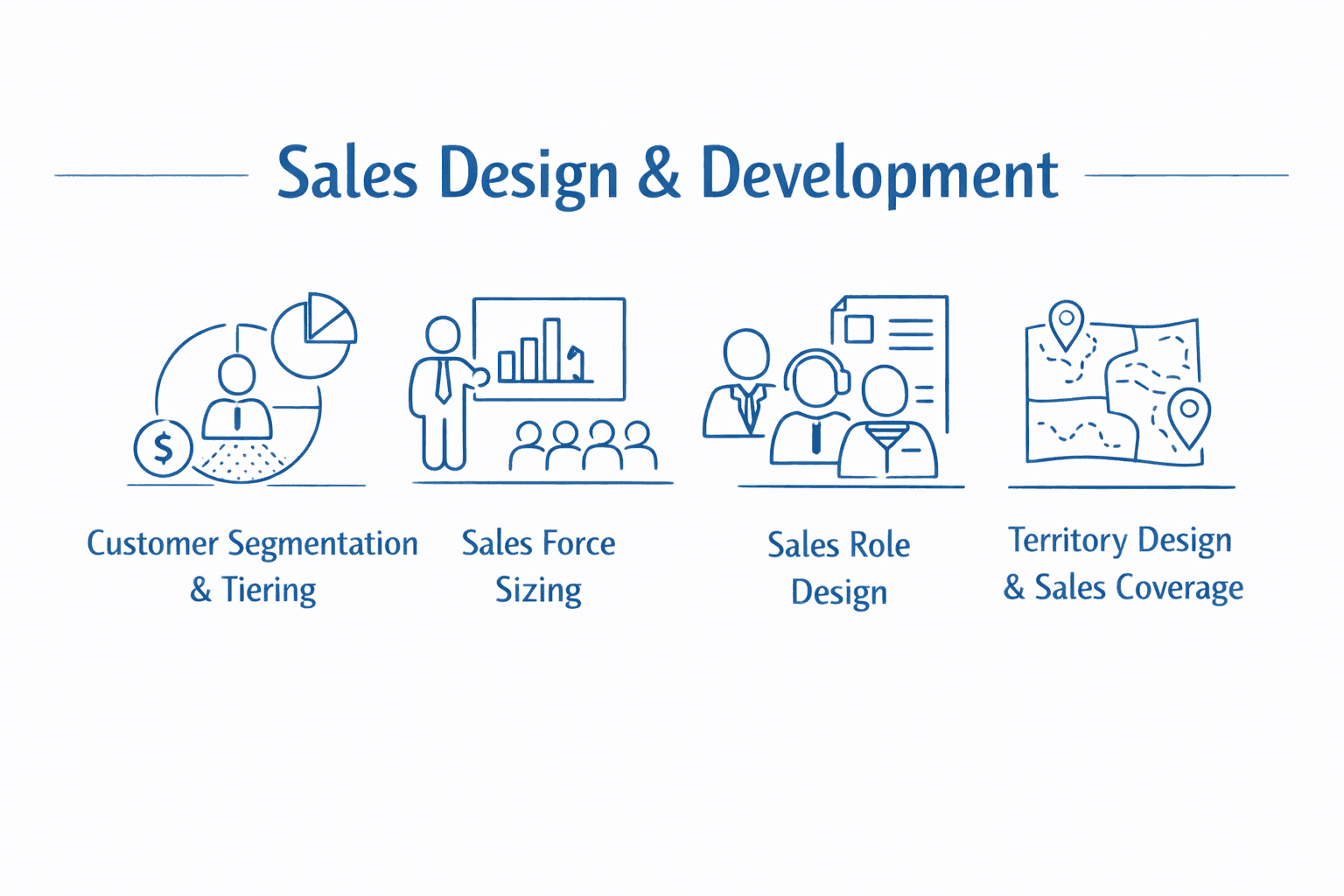
Sales design and deployment model

Aligning coverage to opportunity

Design maturity is about fit: the right segmentation, roles, territories, and capacity for each segment.

Click each card to learn how design maturity improves coverage fit, capacity, and focus.

Levels 1โ€“2: Tiering is ad hoc and driven by manager discretion with little guidance.
Level 3: Tiering reflects buying behavior and vertical/geographic patterns in coverage design.
Levels 4โ€“5: Systematically optimized tiering prioritizes profitable growth using audits and projections.
Levels 1โ€“2: Headcount is based on prior-year results and manager discretion.
Level 3: Headcount is assigned across roles based on segment demands and capacity logic.
Levels 4โ€“5: Sizing uses productivity metrics and role/account capacity considerations for ROI decisions.
Levels 1โ€“2: Roles evolve reactively without standard guidance.
Level 3: Role design aligns to coverage models and territory/segment needs.
Levels 4โ€“5: Roles are evaluated for capacity fit and embedded into coaching and compensation.
Levels 1โ€“2: Resources are deployed locally at manager discretion based on demand.
Level 3: Capacity, segmentation, and roles reduce gaps/overlap with clear rules of engagement.
Levels 4โ€“5: Predictive analytics optimizes deployment by growth potential and seller expertise.

Assessing Sales Development

Sales development capabilities

Creating pipeline consistently

Sales Development maturity shows up in prioritization, repeatability, and throughput.

Click each card to see how development capabilities progress from inconsistent to scalable pipeline creation.

Levels 1โ€“2: Inbound follow-up exists, but prioritization and treatment are inconsistent.
Level 3: Hot vs warm leads are handled differently and qualified to seller expectations.
Levels 4โ€“5: Automation and AI self-serve low-touch leads and optimize SDR capacity.
Levels 1โ€“2: Outbound relies on rep effort; plays vary widely by territory and manager.
Level 3: Repeatable playbooks generate pipeline that converts like seller-sourced deals.
Levels 4โ€“5: AI/automation executes at scale; data science prioritizes accounts and channels.
Levels 1โ€“2: Objectives and processes exist, but hiring/ramp and planning are inconsistent.
Level 3: Clear charter and development programs advance SDRs into broader roles.
Levels 4โ€“5: Dedicated ops uses data and automation to innovate engagement and plan capacity.

Assessing Sales Execution

Sales execution model

Winning and growing accounts

Execution maturity is reflected in how consistently teams apply planning, methodology, and channel motions.

Click each card to understand how execution maturity drives consistency in winning and growing accounts.

Levels 1โ€“2: Account planning is reactive and used mainly at management request.
Level 3: Plans are maintained and incorporate broader internal intelligence.
Levels 4โ€“5: Embedded in workflows and executed collaboratively with customers.
Levels 1โ€“2: Partners can sell products, but enablement and support are basic.
Level 3: Tiered programs and heightened support for high-potential partners exist.
Levels 4โ€“5: Tools and data optimize partner productivity and program effectiveness.
Levels 1โ€“2: Named accounts exist, but program tiers and benefits are inconsistent.
Level 3: Strategic tiers and joint planning improve mutual growth and resourcing.
Levels 4โ€“5: Customers influence product direction and participate in deeper collaboration.
Levels 1โ€“2: Methodology is approved and enabled, but reinforcement varies by manager.
Level 3: Managers reinforce adoption; methodology influences hiring and tool decisions.
Levels 4โ€“5: Integrated across management, training, enablement, and the full buying journey.

Assessing Sales Strategy And Go-to-Market
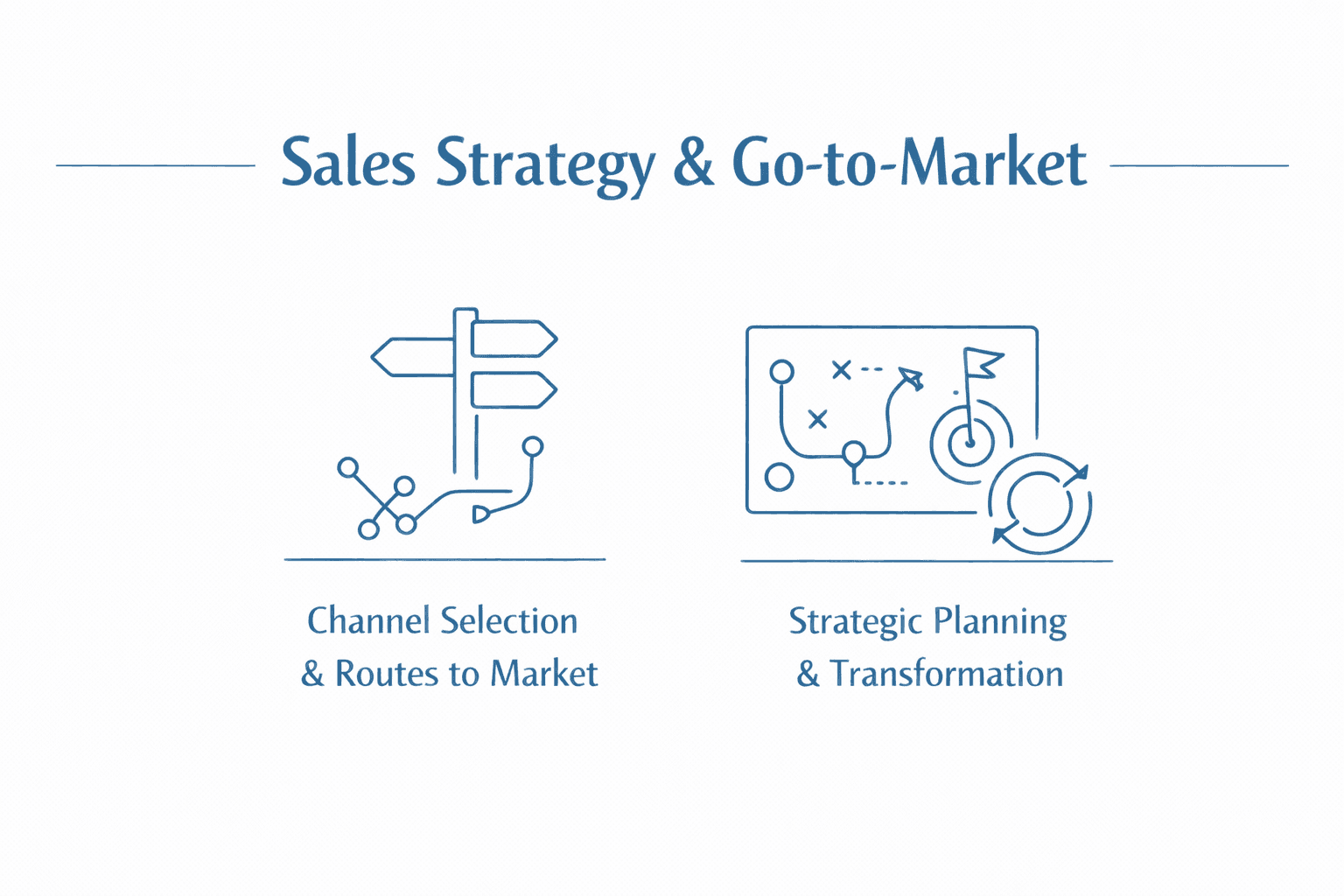
Sales strategy and go-to-market

Where and how you compete

Go-to-market maturity is about fit, trade-offs, and the ability to adapt as segments and channels change.

Click each card to explore how go-to-market maturity improves channel fit and strategic adaptability.

Levels 1โ€“2: Channel choices rely on intuition or status quo rather than segment needs.
Level 3: Channel mix balances cost, effectiveness, and volume by segment using analysis.
Levels 4โ€“5: Analytics and triggers continuously optimize channel fit and prompt reviews.
Levels 1โ€“2: Planning follows a timeline, but intent is not always gap- and data-driven.
Level 3: Intent is built by surfacing and prioritizing gaps and balancing unit mandates.
Levels 4โ€“5: Metrics and triggers enable continuous transformation and data-driven change.

Assessing Sales Operations Management
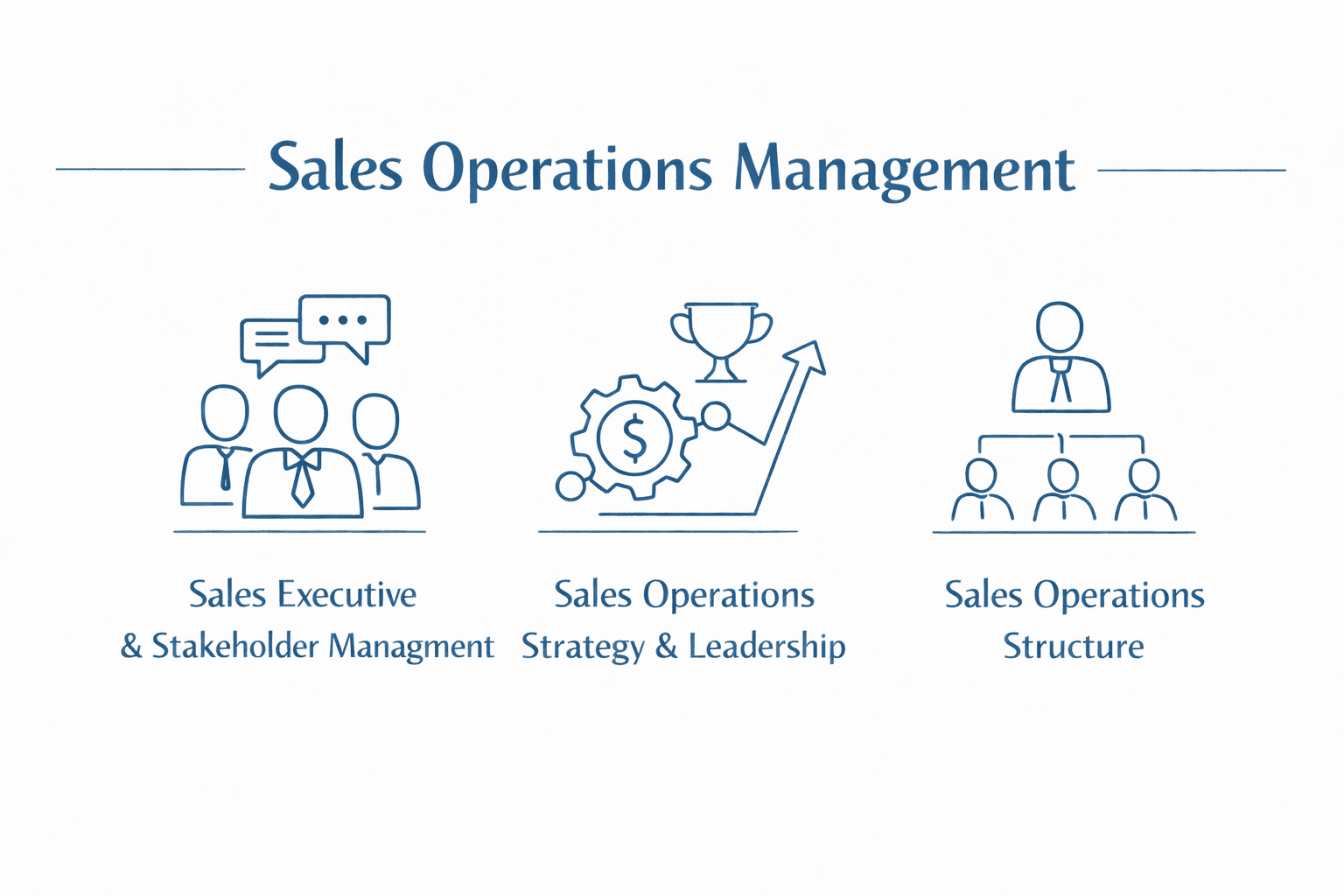
Sales operations strategy hub

Operations as the connector

Sales operations maturity is about connecting strategy to execution through structure, governance, and cross-functional alignment.

Click each card to see how sales operations maturity strengthens alignment and execution.

Levels 1โ€“2: Head of sales leads stakeholder work with tactical ops assistance.
Level 3: Sales ops leads admin functions through mandates and balances unit priorities.
Levels 4โ€“5: Triggers and metrics enable proactive adjustments and fast issue resolution.
Levels 1โ€“2: Ops priorities derive from broader sales plans; little proactive innovation.
Level 3: Joint roadmap links ops capabilities to commercial outcomes and initiatives.
Levels 4โ€“5: Agile, data-backed strategy anticipates changes and drives innovation.
Levels 1โ€“2: Shared resources and informal structure cause inconsistent delivery timelines.
Level 3: Workload analysis guides sizing; planning reduces disruption during peaks.
Levels 4โ€“5: Optimized, agile structure adapts to demand without shifting resources.

Establishing Your Performance Baseline
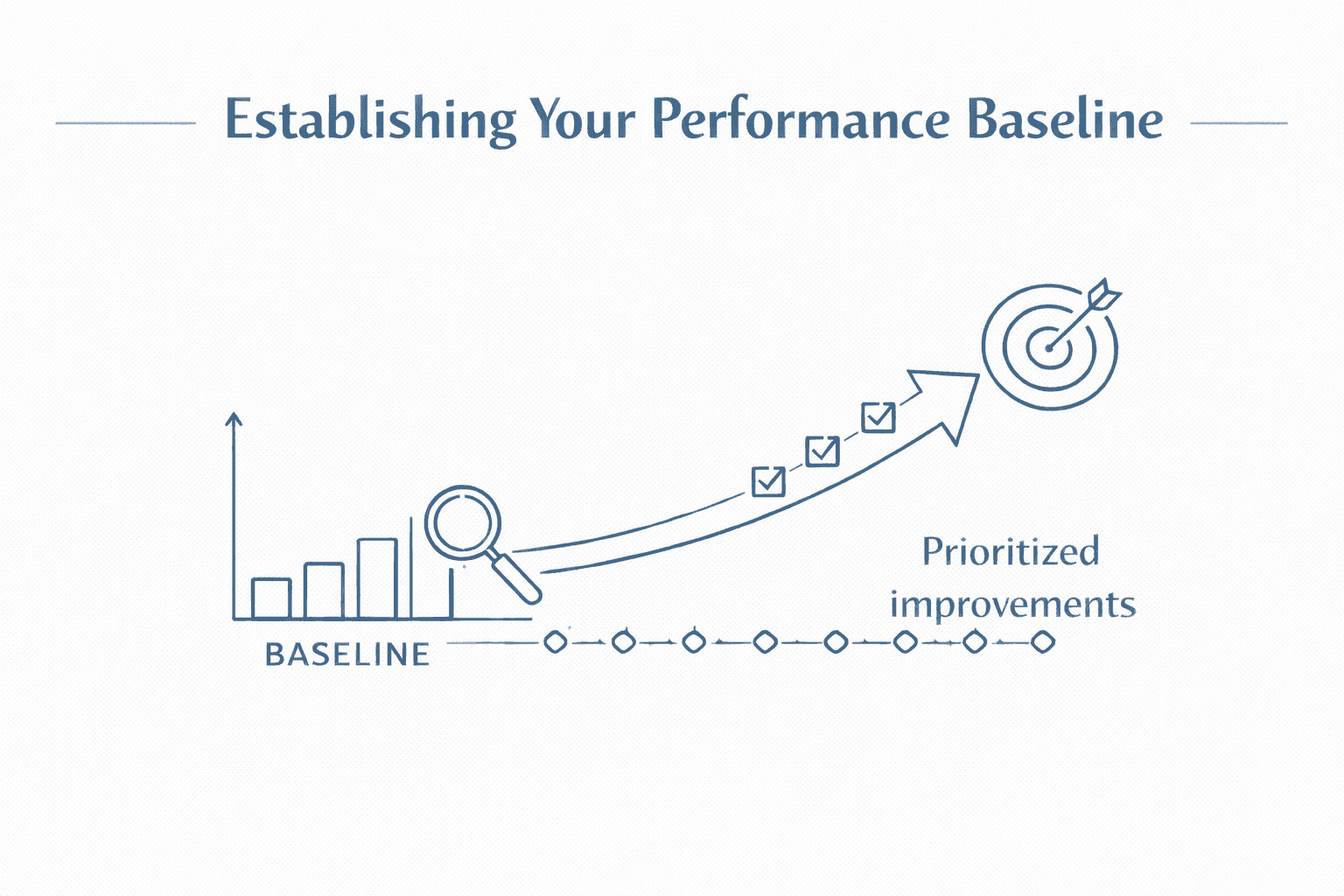
Sales capability heatmap baseline

Creating a fact-based starting point

A baseline helps you compare capabilities objectively and prioritize improvements with confidence.

Click each card to define what you will score and how you will compare capabilities.

Score each capability from ad hoc โ†’ defined โ†’ scaled โ†’ optimized.

Do roles have the skills, capacity, and coaching support to execute consistently?

Are processes clear, adopted, measurable, and aligned to how customers buy?

Do tools reduce friction and enable executionโ€”or add steps and complexity?

Can you link the capability to outcomes like win rate, cycle time, forecast accuracy, or retention?


From Assessment to Action
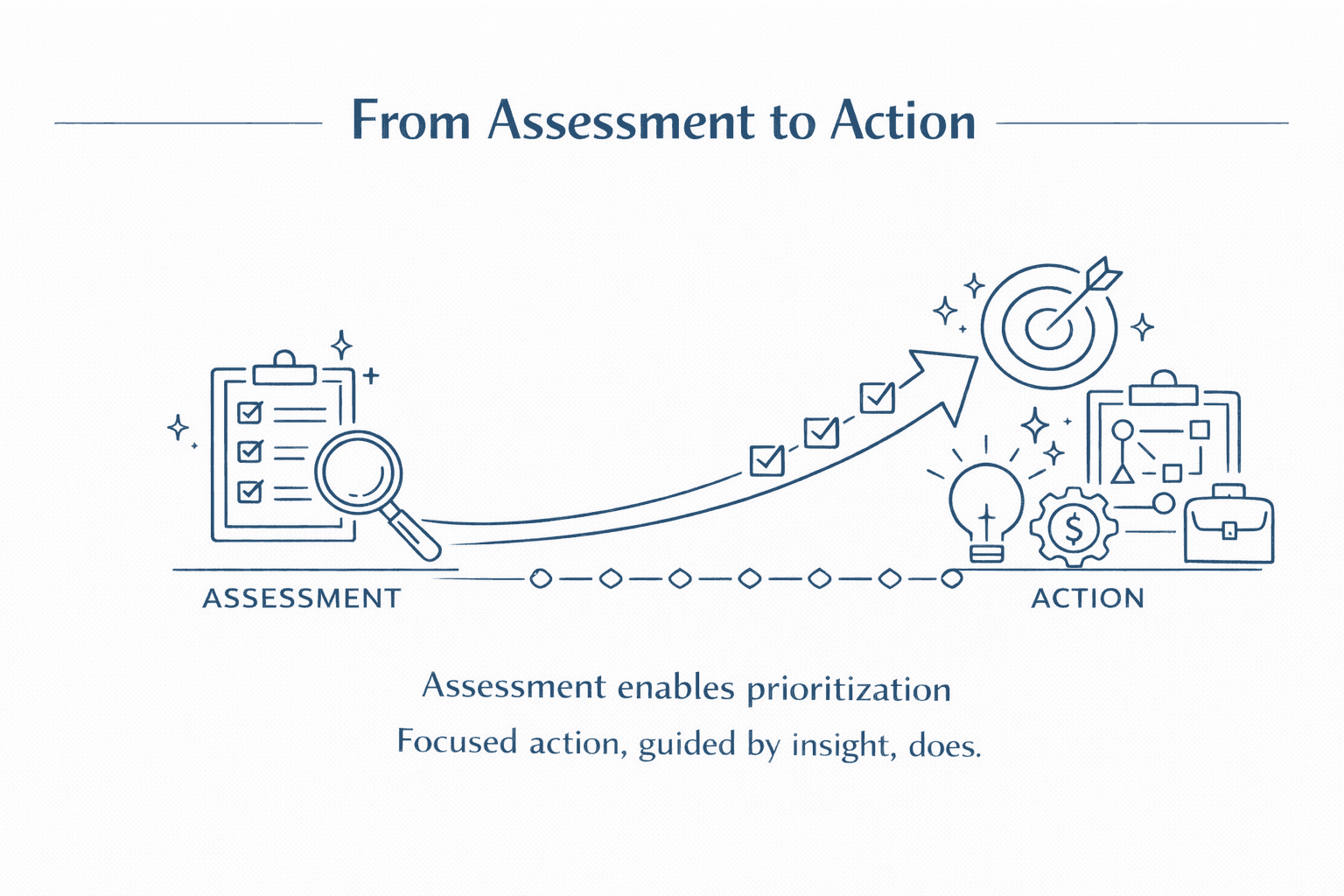
From assessment to action roadmap

Assessment enables prioritization

Assessment does not create value on its own.

Focused action, guided by insight, does.

This baseline becomes the input for your prioritization and roadmap.


Module Summary

Key Takeaways

  • Assess before improving to avoid scattered effort.
  • Use capabilities to diagnose root causes, not symptoms.
  • Evaluate each area through a People, Process, and Technology lens.
  • Establish a baseline to prioritize investments and measure progress.
Ready to Learn More?

Continue Your Learning Journey

Enroll now to access the complete module with interactive exercises, audio lessons, progress tracking, and earn your certificate.

๐ŸŽ“ Certificate of completion included